
How to Keep Color-Treated Hair Looking Good Between Visits
by Rosalind Ferrier, Master Colorist · ~1,722 words
Every few weeks somebody sits down in my chair, looks in the mirror, and asks the same question in slightly different words. Why did this fade so fast? Sometimes there is a real answer and sometimes the honest answer is that hair color is a temporary thing living on a surface that gets washed, heated, and rained on constantly. But most of the time there are two or three specific habits doing most of the damage, and once you know which ones they are, you can stretch a color a lot further than you think.
I have been coloring hair at Marrow and Vine in Vernon Hills for a long time now, and I have watched clients spend a surprising amount of money on things that do very little while ignoring the free things that do a lot. So this is the version of the conversation I have at the chair, written down. No product pitch at the end. Just what actually matters.
One thing worth saying up front: what happens in the first two days after your appointment matters more than almost anything else you do in the following six weeks. If you get that part right, everything else is easier.
The first 48 hours do most of the work
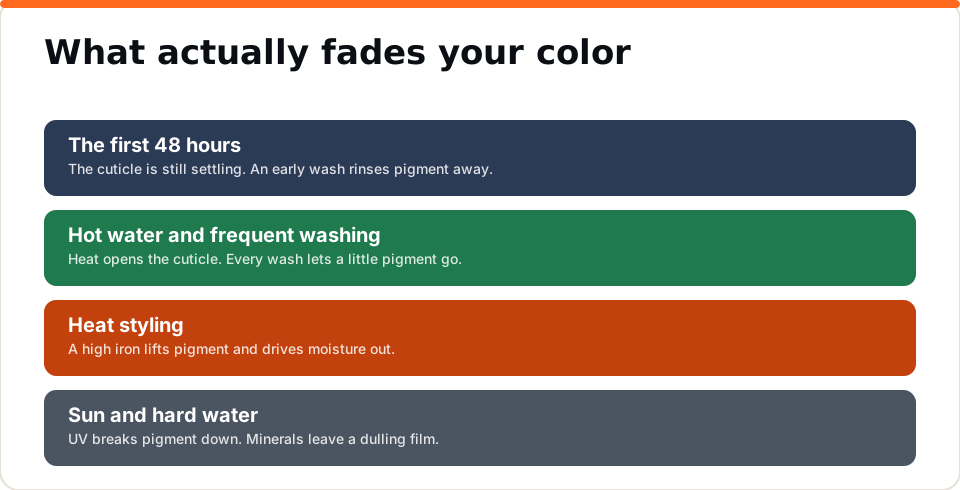
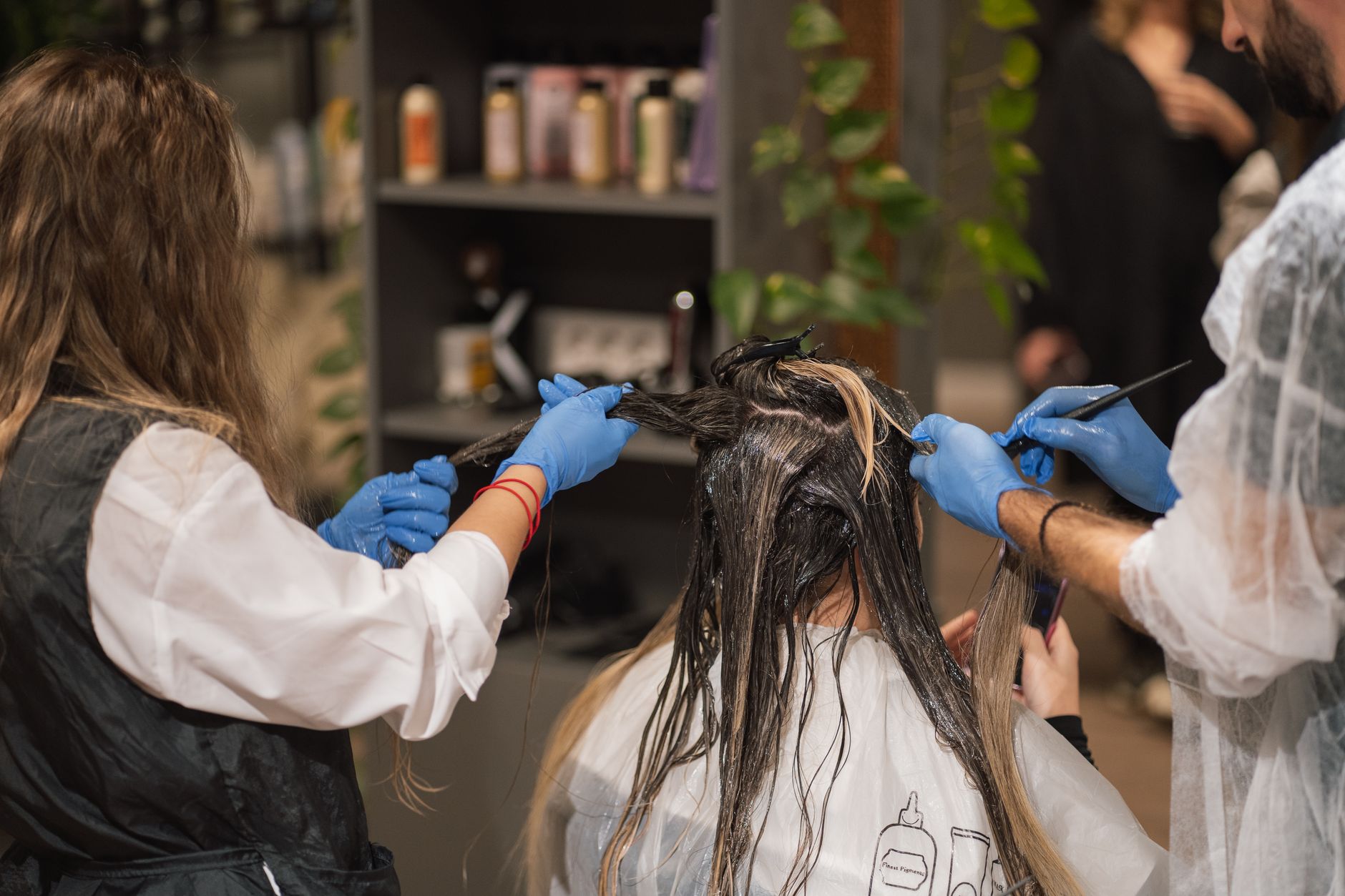
When color goes on your hair, the cuticle, which is the outer layer of overlapping scales, has been opened so pigment can get inside. It does not slam shut the second you leave the salon. It settles gradually, and the pigment molecules keep locking into place for a day or two afterward.
So when you go home and wash your hair that night because it feels a little heavy or you just want to get back to normal, you are rinsing pigment down the drain before it ever finished settling. I have seen clients lose a visible amount of tone in one early wash. It is genuinely the single most preventable form of fade I encounter.
Give it two days. Three if you can stand it. Sleep on it, pull it back, wear a hat, do whatever gets you through. This is not a rule salons invented to seem fussy. It is the one piece of aftercare advice where the difference shows up plainly in the mirror.
Red tones and fashion colors are the least forgiving here. Those pigment molecules are larger and sit closer to the surface, which is why reds famously fade first. If you just went red, protect those first two days like they are part of the appointment, because functionally they are.
Water temperature and washing frequency
Here is the thing nobody wants to hear: hot water opens the cuticle back up, and every time it opens, a little pigment leaves. That steamy shower you love is quietly undoing your appointment.
You do not have to take a cold shower. Wash your body in whatever temperature you like, then turn it down for the two minutes your hair is under the water. Lukewarm is enough. You are not trying to shock your hair, just avoid cooking the color out of it.
Washing frequency matters just as much. Every wash is an opportunity for pigment to escape, so fewer washes means slower fade. Most people with color-treated hair do fine washing two or three times a week. If you are washing daily out of habit rather than need, that habit alone can be costing you a couple of weeks of vibrancy per appointment.
Dry shampoo helps here, though I will be honest about its limits. It absorbs oil at the roots and buys you a day. It does not clean your scalp, and if you lean on it for five days running, you will end up with buildup that eventually requires a stronger wash, which defeats the purpose. Use it to skip a day, not a week.
Heat styling is the fade you can see
A flat iron at a high setting is doing something similar to hot water, but faster and more intensely. Heat drives moisture out and lifts pigment. Blondes see it as brassiness creeping in. Brunettes see it as flatness. Reds just watch the whole thing go.
What actually helps:
Turn the temperature down. Most people run their tools far hotter than their hair needs. Fine hair rarely needs anything above a moderate setting. If you smell anything or see steam, that is not styling, that is damage.
Use a heat protectant, and use it on damp hair before you blow dry, not just on dry hair before you iron. It is a thin buffer, not a shield, but it is one of the few products in this category that earns its shelf space.
Go over each section once. The second and third pass are where the real harm happens, and they usually mean the temperature or the technique needs adjusting, not that the hair needs more heat.
And give yourself heat-free days. Air drying two or three times a week is not a sacrifice, it is the cheapest color protection available.
Sun and hard water, the two you cannot see
Ultraviolet light breaks down color pigment the same way it fades a shirt left on a clothesline. If you spend real time outdoors in summer, your color will lift and shift no matter how careful you are in the shower. A hat is the most effective UV protection for hair that exists, and it costs nothing to wear.
Hard water is the one that catches people off guard, and parts of our area have plenty of it. Mineral-heavy water deposits calcium and magnesium on the hair shaft. Over weeks, that film dulls the tone, roughens the texture, and can push blondes toward an orange cast that has nothing to do with your colorist's formula. If your hair feels coated and looks muted no matter what you do, and it started when you moved or changed showers, hard water is a reasonable suspect.
A clarifying treatment every few weeks removes mineral buildup. A shower filter can reduce it going forward, though quality varies widely and the cheap ones do less than advertised. Ask me to look at your hair before you buy anything. Mineral buildup has a specific feel, and I can usually tell you in ten seconds whether that is what is happening.
Chlorine is the pool version of the same problem. Wet your hair with clean water before you swim so it absorbs that instead of pool water, and rinse right after.
What I tell people not to bother with
I would rather you spend less and get better results, so here is the honest part.
Most expensive shampoos are not worth the premium. What matters is that it is gentle and free of harsh detergents. A reasonable drugstore option that meets that description will treat your color about the same as something three times the price. The exception is a good toning shampoo if you are blonde, which does real, visible work by depositing a small amount of pigment.
Salon-only is a distribution label, not a quality guarantee. Some of the best formulas are widely available and some professional lines are ordinary products with better packaging.
At-home glosses and toners are where I see the most money wasted and the most repair work created. They can absolutely work, but the margin between refreshing your tone and going muddy or green is narrow, and correcting it costs more than the gloss saved you.
And more product, generally, is not better. Layering five things on damp hair mostly produces buildup. Two that suit your hair beat five that sound impressive.
One genuine caution, not a scare: if you are trying something new, especially an at-home color or any product you have not used before, do a patch test first. Apply a small amount behind your ear or on your inner elbow and wait the full time the instructions specify. We do this in the salon for new color clients too. Sensitivities can develop over time, so having used something for years is not a guarantee. If you want to know how cosmetic products are regulated, or you have a reaction you want to report, the U.S. Food and Drug Administration is the authority in this area. This is not something to be anxious about. It is a five minute step that prevents a rare but genuinely unpleasant problem.
Building a routine you will actually keep
The best color care routine is the one that survives a busy Tuesday. So keep it small.
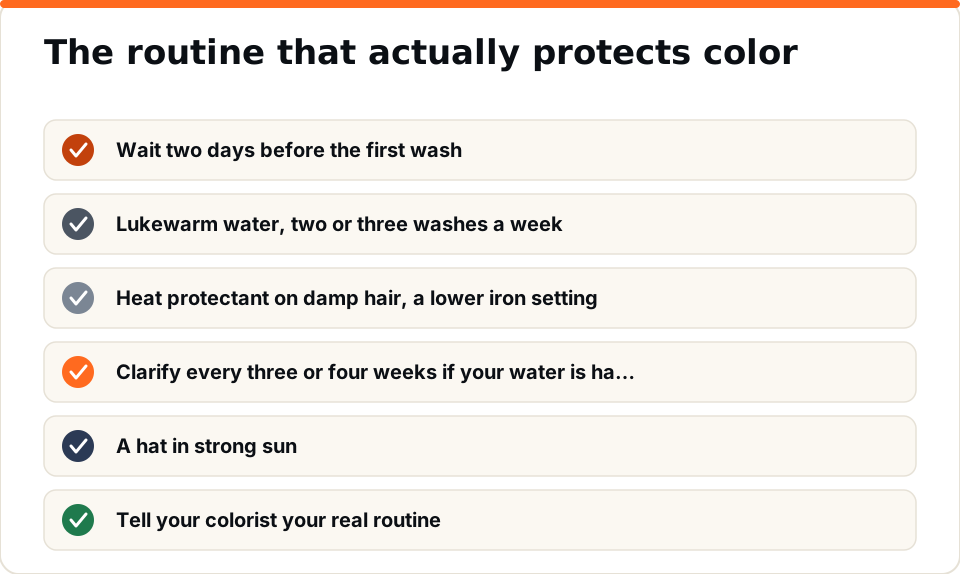
Wash two or three times a week with lukewarm water and a gentle shampoo. Condition every wash, focusing on the mid-lengths and ends. Use a heat protectant whenever heat is involved, and use less heat than you think you need. Clarify every three or four weeks if your water is hard. Wear a hat in strong sun. Protect the first two days after every appointment like they matter, because they do.
That is the whole list. Everything past it is optional and most of it is optional in the sense of not really doing much.
One more thing that is not about products at all: tell your colorist the truth about your routine. If you swim four days a week, or you flat iron every morning, or you wash your hair every single day and you are not going to stop, say so. I can pick a formula and a tone that ages well under those exact conditions. What I cannot do is compensate for a routine I do not know about. A client who tells me they will never wash twice a week gets a better result than one who nods and then does whatever they were always going to do.
Color is a partnership. I get a few hours with your hair. You get the other six weeks.
If your color is fading faster than it should and you cannot work out why, bring it in. Sometimes it is the formula, sometimes it is the water, sometimes it is a shower that runs hotter than anyone realized. It is usually fixable once we find it. Come see us at Marrow and Vine and we will figure out what is actually going on, no pressure and no shopping list required.