
Physical Therapy After Rotator Cuff Surgery: What to Expect and How to Recover Well
by Joshua Telfer, DPT · ~2,655 words
Reviewed by Joshua Telfer, DPT. Last reviewed July 9, 2026.
You just came home from rotator cuff surgery. Your arm is in a sling, your shoulder is sore, and somewhere in the back of your mind, a question is already forming: when will I be able to reach into an overhead cabinet again? When can I pick up my grandchild, swing a golf club, or just sleep through the night without waking up in pain?
Those questions are completely normal. Surgery is a significant event, and it makes sense that you want to understand what comes next. The truth is, the procedure itself repairs the torn tissue, but the months of physical therapy that follow are where lasting recovery actually happens. Rebuilding strength, restoring range of motion, and learning to move your shoulder safely again all take time, expert guidance, and a plan built specifically for you.
At FYZICAL Saint Peters, we work with adults throughout Saint Peters and the surrounding communities who are at exactly this point in their journey. Our goal is to be a knowledgeable, steady partner through every phase of shoulder surgery recovery, not just a place you go to do exercises. This article walks through what rotator cuff rehabilitation actually looks like, what milestones to expect along the way, and why a personalized, careful approach makes such a meaningful difference in how well and how fully you recover.
Why Physical Therapy Is So Important After Rotator Cuff Surgery
The rotator cuff is a group of four muscles and their tendons that wrap around the head of the upper arm bone and attach to the shoulder blade. Together, they hold the shoulder joint stable and power nearly every movement your arm makes, from reaching forward to lifting, rotating, and pushing. When one or more of those tendons tears, whether from a sudden injury or years of wear, surgical repair reattaches the tendon to the bone. That repair then has to heal, and healing takes time.
The challenge is that a tendon-to-bone repair goes through a predictable biological process that cannot be rushed. In the early weeks, the reattached tissue is fragile. New fibers are laying down gradually, and too much force too soon can disrupt that process and cause a re-tear. On the other hand, keeping the shoulder completely still for too long leads to scar tissue buildup and joint stiffness that becomes its own obstacle to recovery. Post-operative shoulder rehab threads that needle by introducing movement that is carefully graded to match what the healing tissue can actually handle at each stage.
Physical therapy serves several essential functions during this period. It manages pain and swelling early on, guides you through passive and then active movement to keep the joint from stiffening, and progressively rebuilds the muscle strength and coordination your shoulder needs for daily life. Without structured PT, patients often either move too much too soon or avoid movement out of fear, both of which can extend recovery significantly or lead to complications. For people who have had prior issues like bursitis in the shoulder, physical therapy also addresses the underlying movement patterns that may have contributed to the original injury.
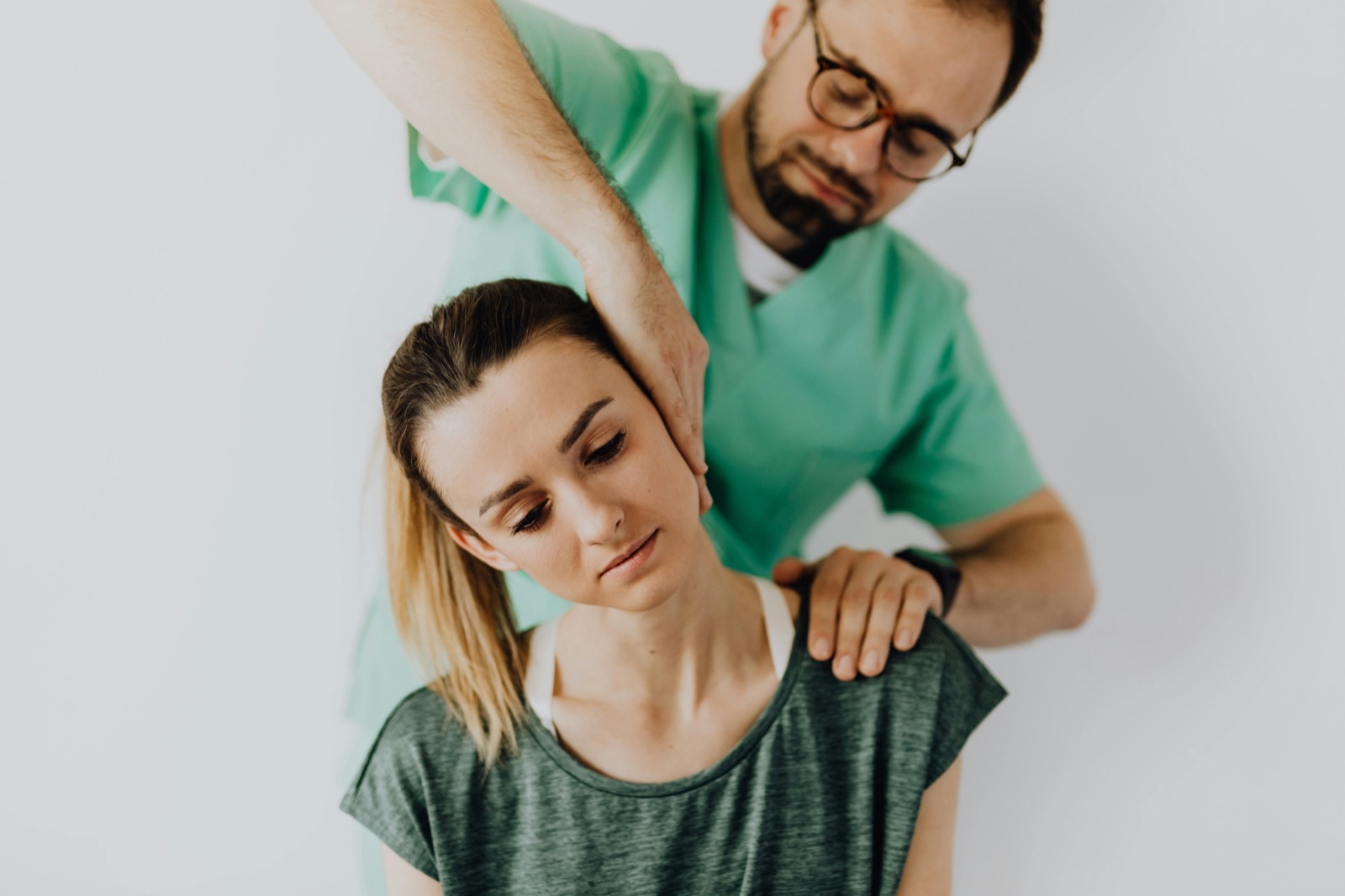
At FYZICAL Saint Peters, our approach to orthopedic physical therapy starts with understanding you as a whole person. Your age, your goals, the size of your tear, and what your surgeon's protocol recommends all shape your plan. We explain what we are doing and why at every step, because patients who understand their own recovery tend to make better decisions throughout it. This is general education to help you understand the rehabilitation process; your surgeon and your physical therapist will always be your guides for the specifics of your care.
The Phases of Rotator Cuff Rehab and What Happens at Each Stage
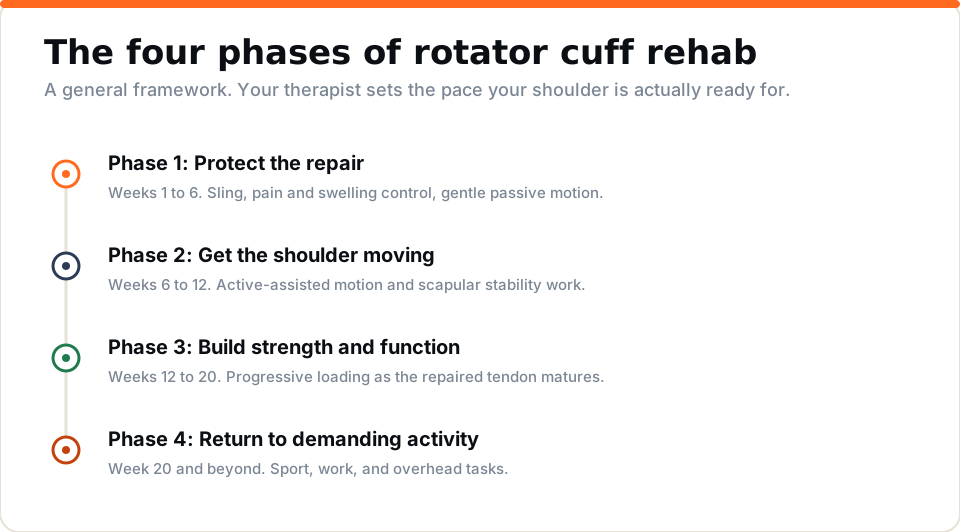
Rotator cuff recovery does not follow a single fixed schedule, but most rehabilitation programs move through four broad phases, each building on the last. The timing and progression depend on your tear size, the surgical technique used, your age, and how your body responds to healing. What follows is a general framework; your physical therapist will adjust the pace based on what your shoulder is actually ready for.
Phase 1: Protecting the repair (roughly weeks 1 through 6)
In the first several weeks, protecting the surgical repair is the top priority. Your shoulder will be in a sling for much of this period, and for good reason. The repaired tendon is at its most vulnerable right now, and certain movements, particularly lifting the arm away from the body or rotating it forcefully, can stress the repair before it has had time to begin healing. This is not a phase to push through. Pain and swelling management, gentle passive range-of-motion exercises (meaning a therapist or a pulley system moves your arm, not your rotator cuff muscles), and pendulum exercises make up most of the early work. Pendulum exercises are simple, gravity-assisted movements that help maintain some joint mobility without loading the repair.
Phase 2: Getting the shoulder moving again (roughly weeks 6 through 12)
Once the repair has had adequate time to begin consolidating, the focus shifts toward active-assisted movement, where you start participating in moving the arm rather than having it moved entirely for you. Scapular stability exercises become central here, because the shoulder blade needs to move well and provide a stable base before the rotator cuff muscles can work effectively. Early strengthening of the muscles around the shoulder girdle, like the middle and lower trapezius, begins in this phase. The repaired tendon itself is still maturing, so loading it directly remains limited.
Phase 3: Building strength and function (roughly weeks 12 through 20)
This is often the phase patients have been waiting for, because it is when real, noticeable strength gains start to happen. Progressive resistance band shoulder exercises, functional movement patterns, and the gradual return of overhead activities with guidance from your PT characterize this stage. The tissue is stronger now, but re-tear risk does not disappear overnight. Every exercise is still progressed deliberately, with your therapist watching your movement quality and listening to your feedback. MedlinePlus, the consumer health resource from the U.S. National Library of Medicine, notes that recovery from musculoskeletal surgery requires careful, staged rehabilitation to restore function safely, which reflects exactly why this phase is not the time to rush.
Phase 4: Return to demanding activities (roughly week 20 and beyond)
The final phase prepares you for whatever your specific goals are, whether that is returning to a sport, going back to a physically demanding job, or simply being able to reach overhead and carry groceries without thinking about your shoulder. Sport-specific or occupation-specific training rounds out this phase. Some patients reach this point feeling close to their pre-injury level of function; others find they have actually built strength and body awareness they did not have before surgery. Either way, the goal is confident, capable movement for the long term.

Timelines vary considerably. A small partial-thickness tear repaired in an otherwise healthy, active adult may progress faster than a large full-thickness tear repaired in someone managing other health conditions. Your physical therapist's job is to read your shoulder, not just follow a chart.
Common PT Exercises and Techniques Used During Shoulder Recovery
The exercises used in rotator cuff rehabilitation are more varied than most patients expect when they start. Early on, the work feels almost passive, small, controlled movements that seem modest but are doing important things for the healing tissue and the joint's mobility.
Pendulum exercises are typically among the first movements introduced after surgery. You lean forward, let your arm hang freely, and use gentle momentum from your torso to create small circular or side-to-side movements at the shoulder. It looks deceptively simple, but it decompresses the joint and maintains early mobility without activating the repaired tendons. As healing progresses, passive range-of-motion exercises give way to active-assisted drills, using a cane, a pulley, or the opposite arm to guide the surgical side through greater arcs of movement.
Isometric holds, where you contract the muscle without actually moving the joint, are often introduced before full range-of-motion work because they load the tissue gently and help reconnect your brain to muscles that may have been inhibited by pain and disuse. From there, resistance band shoulder exercises build functional strength progressively. These are not generic gym band exercises; the specific angles, resistance levels, and movement patterns are chosen to match your healing stage and your shoulder's current capacity.
Manual therapy is another core part of the work your physical therapist may do with you in the clinic. Hands-on techniques can help reduce scar tissue formation, improve joint mobility, and address the surrounding soft tissue that tightens during the post-surgical period. Some patients at FYZICAL Saint Peters also benefit from dry needling during their shoulder recovery, particularly when pain or muscle inhibition is slowing their progress. Dry needling involves inserting thin filiform needles into specific muscle areas to reduce pain and improve muscle activation; it is one more tool a skilled PT can draw on to support the broader recovery process.
Every exercise we introduce at FYZICAL Saint Peters comes with an explanation. We want you to understand what the exercise is doing, how to do it correctly, and what to watch for when you practice it at home between sessions. Home exercise follow-through makes a real difference in how quickly and safely patients progress.
One important reminder: the exercises described here are meant to give you a general understanding of what rotator cuff rehabilitation involves. They are not a program for you to follow independently. Your physical therapist will design a program based on your specific repair, your surgeon's protocol, and how your shoulder responds over time.
How to Protect Your Repair and Avoid Re-injury During Recovery
Re-tear is one of the most serious concerns during rotator cuff recovery, and it is not an abstract risk. The repaired tendon goes through a maturation process that takes well over three months, and during that window, the tissue is genuinely vulnerable to being overstressed. A sudden wrong movement, lifting something too heavy, or reaching in an unexpected direction can put force through the repair before it is ready. That does not mean you need to live in fear, but it does mean that the protective habits you build during recovery matter as much as anything you do in the clinic.
Sling use is not just a formality. Your surgeon and physical therapist will give you guidance on when and how to wear it, and following that guidance closely during Phase 1 is one of the most important things you can do. Sleeping position matters too. Many patients find that sleeping reclined rather than flat reduces shoulder tension and makes rest more comfortable in the early weeks. Propping the arm on a pillow in a neutral position helps. Reaching behind your back, lifting the arm out to the side, or carrying anything heavier than your surgical team has cleared are the kinds of movements to avoid until your PT gives you the green light.
Knowing the warning signs is equally important. Sudden sharp pain after a period of relative improvement, significant new swelling, or a popping or tearing sensation in the shoulder are all reasons to contact your surgeon or physical therapist promptly. These may or may not indicate a re-tear, but they should always be evaluated rather than waited out.
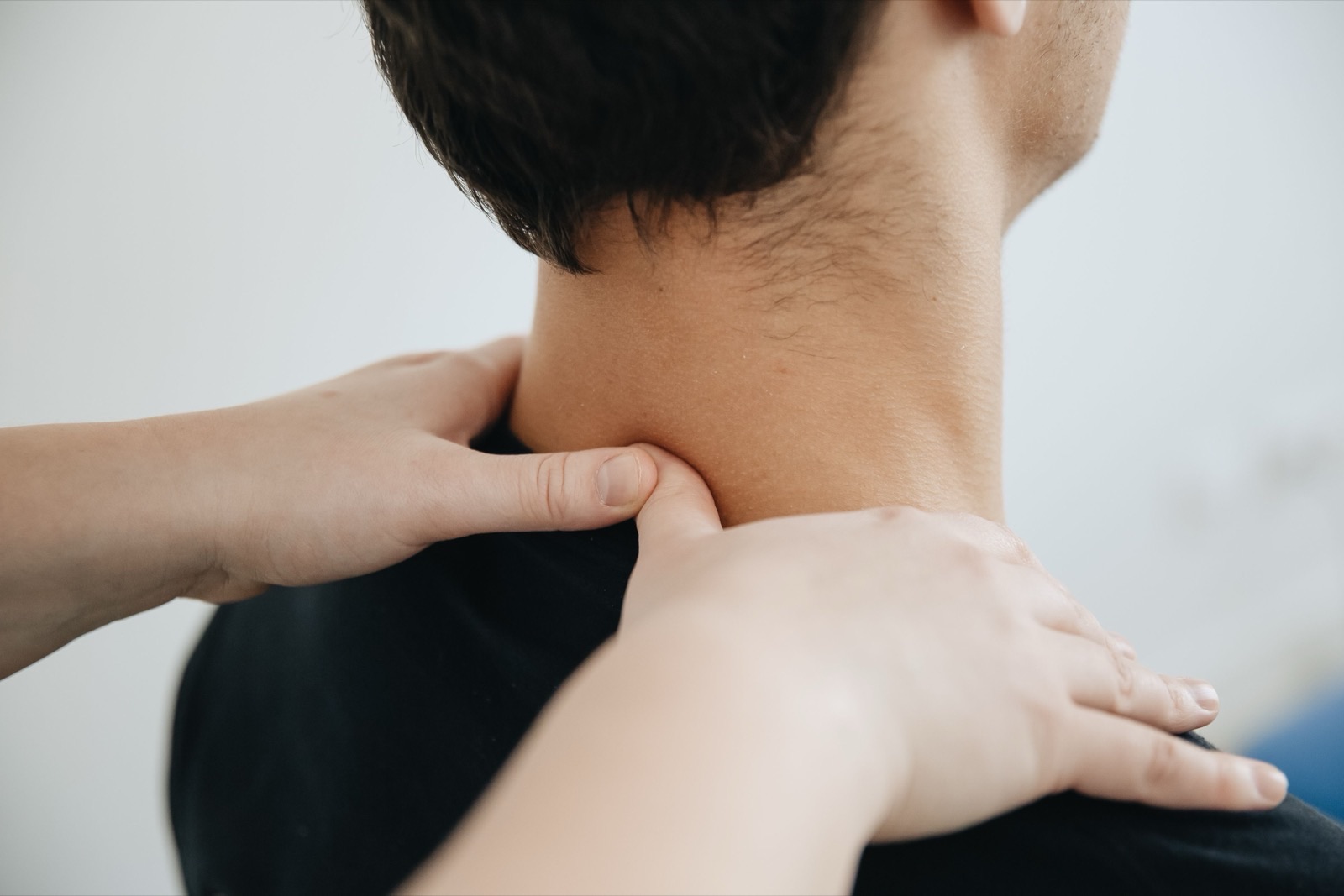
Beyond the acute protective measures, posture and scapular awareness become long-term habits that support shoulder health for years. Many people with shoulder problems have developed compensatory movement patterns over time, rounding forward, hiking the shoulder up, or allowing the shoulder blade to tip forward during arm movement. A good PT teaches you to recognize and correct these patterns so that as your strength returns, it is built on mechanics that actually protect the joint. For patients who have dealt with shoulder bursitis or other underlying issues before their surgery, addressing these mechanics during rehab is especially valuable.
At FYZICAL Saint Peters, helping patients move safely in real life, not just in the clinic setting, is a core part of what we do. Recovery happens at home, at work, and out in the community, and the strategies you learn during your sessions need to transfer to all of those environments.
What to Look for in a Physical Therapy Clinic After Rotator Cuff Surgery in Saint Peters
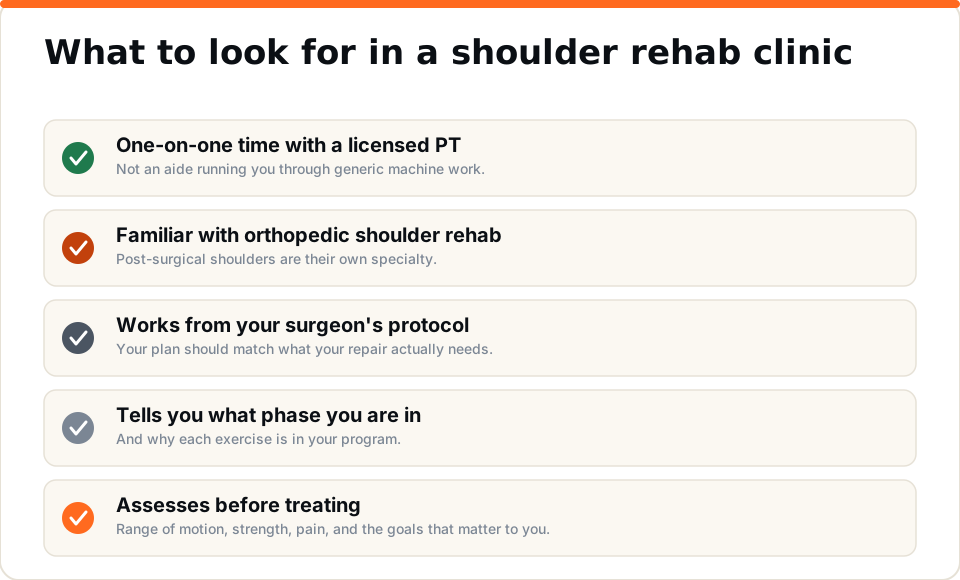
Choosing the right clinic for post-surgical shoulder care is a real decision, and it is worth thinking through. Not all outpatient physical therapy experiences are the same. For rotator cuff recovery specifically, you want one-on-one time with a licensed physical therapist who is familiar with orthopedic shoulder rehabilitation and who will design a program around your surgeon's protocol and your personal goals. A clinic where you spend most of your visit with an aide doing generic exercises on a machine is not the same as one where a skilled PT is actively involved in your care every session.
Clear communication matters. You should always know what phase of recovery you are in, why you are doing each exercise, and what the next milestone looks like. If you leave a session unsure of those things, that is worth addressing with your care team.
At FYZICAL Saint Peters, a physical therapy evaluation starts with a thorough assessment before any treatment begins. We look at your shoulder's current range of motion, strength, pain levels, and the specific functional goals that matter most to you. We review your surgeon's post-operative protocol and any notes from your surgical team so our plan aligns with what your repair needs. That collaborative relationship with referring surgeons is something we take seriously, because your care team needs to be working from the same page.
Adults throughout Saint Peters and the wider community searching for physical therapy near Saint Peters, Missouri, or looking for a PT clinic in 63376 will find that FYZICAL Saint Peters is built around full recovery, not just getting you out of acute pain and sending you on your way. The National Institutes of Health recognizes that structured, individualized rehabilitation is essential to positive surgical outcomes, which is the standard we hold ourselves to.
When you come in for your first appointment, bring your post-operative protocol if your surgeon provided one, any imaging reports, and a list of the activities you most want to get back to. That last part matters more than patients sometimes realize. Knowing you want to return to swimming, or to carrying your grandchild, or to working overhead on a job site, shapes the entire arc of your rehabilitation program.
Recovery is a team effort. You, your surgeon, and your physical therapist all have a role to play, and none of you has to figure it out alone.
Rotator cuff surgery takes real courage, and it is worth doing right. The procedure repairs the structural problem, but the physical therapy that follows is where you actually rebuild a shoulder that works well for your life. Progress is gradual, sometimes humbling, and always more rewarding when you have a clear plan and people in your corner who genuinely understand the process.
At FYZICAL Saint Peters, we serve adults of all ages throughout Saint Peters and the surrounding communities who are working through exactly this kind of recovery. Our team brings expertise in orthopedic physical therapy together with the kind of individualized attention that makes a real difference, explaining the plan, adjusting it when needed, and staying focused on what matters to you.
Ready to start your rotator cuff recovery on the right foot? Contact FYZICAL Saint Peters today to schedule your evaluation and get a personalized plan built around your goals and your timeline.
This article is general health information and is not a substitute for individualized medical advice. Talk with your healthcare provider about your specific situation.