
Vertigo Therapy in Daphne Moves Through Distinct Phases and Knowing Each One Helps You Trust the Process
by the clinical team at FYZICAL Therapy & Balance Centers, Daphne · ~2,731 words
From the clinical team at FYZICAL Therapy & Balance Centers, Daphne. Last updated November 3, 2026.
Most people don't describe vertigo as spinning. They describe it as the moment they learned which direction they can't turn their head anymore.
They stop looking up at shelves. They sit up slowly, every single morning, because one too-quick move sends the room tilting sideways. They cancel plans without explaining why, because "dizzy" doesn't seem like enough of a reason, and yet it's exactly enough to make driving feel dangerous or a crowded grocery store feel impossible. Life doesn't stop. It just quietly rearranges itself around a symptom.
That rearrangement is what makes vertigo therapy so important to understand before you start it. A lot of people arrive at their first appointment not knowing what will actually happen, or whether anything can change, or how long change might take. This article walks through the full sequence, from the first phone call to the day you realize you've stopped cataloguing your triggers, so that the path ahead is visible before you're on it.
Before the First Appointment, What Is Actually Happening in the Inner Ear and Brain
Your vestibular system is doing something extraordinary right now, and you will never notice it unless something goes wrong. Deep inside each inner ear, tiny fluid-filled canals detect rotational movement, and nearby structures called the otolith organs sense gravity and linear motion. That information travels up the vestibular nerve into the brainstem, where it gets cross-referenced with signals from your eyes and from sensors in your muscles and joints. The result is your sense of where you are in space. Stable. Oriented. Upright.
When any part of that system sends inaccurate or conflicting signals, the brain receives a mismatch it can't immediately explain. That mismatch is what you feel as dizziness, spinning, or the sudden sense that the floor has shifted under you.
The most common cause of sudden, positional vertigo is benign paroxysmal positional vertigo, or BPPV. In BPPV, tiny calcium carbonate crystals that normally sit in the otolith organs get displaced into one of the semicircular canals. When the head moves, those crystals shift through fluid they don't belong in and create an erroneous signal of rotation. The brain doesn't know the signal is wrong. It just responds to what it's receiving.
Other sources of vestibular disruption include viral inflammation of the vestibular nerve, reduced blood flow, inner ear pressure changes, and neurological factors. The common thread is a mismatch between what the vestibular system is reporting and what the eyes and body are experiencing.
Here's what makes this particularly frustrating for many people:
- MRI and CT scans often come back normal. These images look at structure, not at the functional accuracy of vestibular signals. A brain that looks fine on imaging can still be receiving profoundly inaccurate input from the inner ear.
- Standard hearing tests don't assess vestibular function. An audiologist can confirm whether you hear well; that tells almost nothing about how your balance organs are working.
- Symptom onset is often dismissed. People are told it's stress, anxiety, or age, when the actual driver is a measurable dysfunction in a system that most general practitioners aren't trained to evaluate in detail.
One more thing worth understanding: the instinct to stop moving is completely understandable, and it makes things worse. When moving your head reliably triggers symptoms, the natural response is to move it less. Keep the neck stiff. Turn the whole body instead of just the head. Stay in positions that feel safe. This compensation limits the brain's exposure to the mismatch, which means the brain never gets the input it needs to begin correcting for it. Spatial orientation doesn't recalibrate in stillness. It recalibrates through controlled, guided movement.
That's why a specialized vestibular evaluation, not a general physical exam, is the necessary starting point.

What Happens During a Vertigo Therapy Evaluation at FYZICAL Daphne
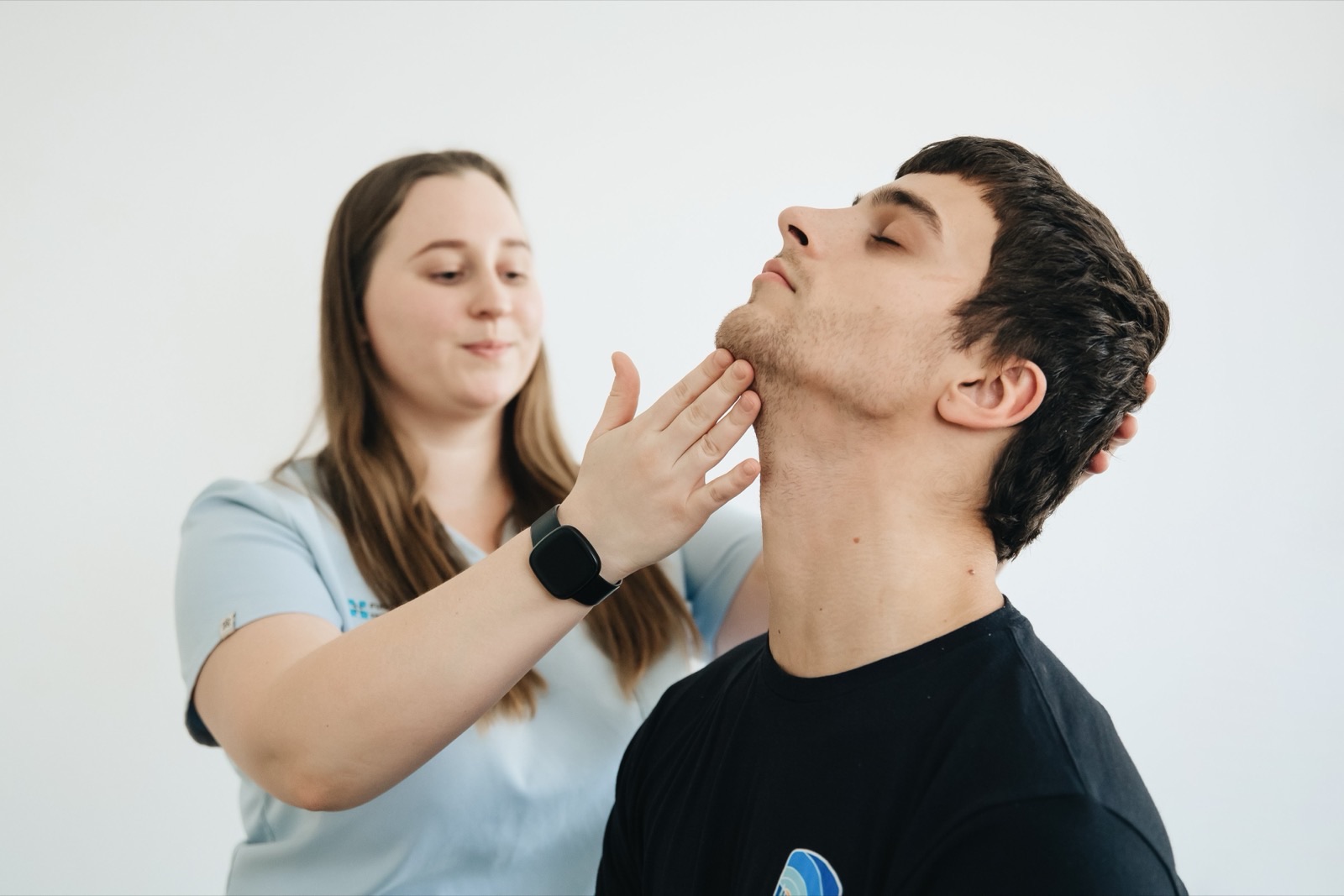
The evaluation is probably not what you're picturing. There's no imaging equipment, no ear drops, and nothing that requires you to stay completely still. What it requires is an honest, thorough conversation and a structured set of movement and position tests that give the therapist a precise picture of where in the vestibular system the problem lives.
The session begins with a detailed intake. Your therapist will ask about when symptoms first appeared, what seems to trigger them, how long episodes last, and, critically, how your daily life has changed in response. That last part matters more than it might seem. The way symptoms have reorganized your routines, which activities you've stopped doing, which head positions you now avoid, tells the therapist a great deal about the pattern of dysfunction and the compensation strategies that have built up around it.
From there, the evaluation moves to clinical testing. Some of what gets assessed:
- Gaze stability. Can you hold a visual target steady while your head moves? Difficulty here points to a problem in the reflex that links inner ear signals to eye movement control.
- Positional maneuver testing. The therapist guides the head through specific positions while watching the eyes for a characteristic involuntary movement called nystagmus. The pattern of nystagmus can identify which canal is involved in BPPV and which ear is affected, which is essential information before any treatment maneuver is performed.
- Balance under varied sensory conditions. Standing on different surfaces, with eyes open and closed, reveals how well the brain can integrate or compensate for different combinations of sensory input.
- Functional movement screening. Reaching, turning, and transitions between sitting and standing can all surface compensation patterns that aren't visible in static testing.
Symptoms may briefly intensify during certain tests. That's expected and informative, not a sign anything is going wrong. A test that provokes symptoms is confirming a mechanism, and a mechanism that's confirmed can be treated.
Because FYZICAL Daphne operates on a one-on-one care model, this evaluation isn't rushed. There's no rotating through staff between tasks. The therapist who conducts the evaluation is building the personalized treatment plan from everything observed in that session, and the two go together. If you want a fuller picture of what a vestibular therapist actually does before that first appointment, the scope and methods behind a vestibular evaluation are worth reading beforehand.
The Early Phase of Treatment, When the Brain Begins Relearning What Stable Feels Like
For people with BPPV, the most immediate intervention is a canalith repositioning maneuver. The most commonly used is the Epley maneuver. The therapist moves the head through a specific sequence of guided positions designed to use gravity to move the displaced crystals out of the semicircular canal and back toward the area where they can be safely reabsorbed. It's not painful. It can be temporarily intense. And when it works, relief can come quickly, sometimes within one or two sessions.
It's worth being honest, though: canalith repositioning resolves BPPV, but BPPV is one diagnosis among several. For patients whose symptoms stem from vestibular nerve dysfunction, inner ear inflammation, or more complex patterns of sensory mismatch, the early treatment phase focuses on two other core approaches.
Vestibular habituation uses controlled, repeated exposure to the movements or conditions that trigger symptoms. The goal is not to suffer through discomfort but to give the brain a consistent input it can begin to adapt to. Each exposure is a data point. Over repeated sessions, the brain's alarm response to that input gradually decreases. Symptoms don't vanish overnight. They become more manageable, then less frequent, then less intense.
Gaze stabilization exercises train the reflex that keeps your vision steady during head movement, called the vestibulo-ocular reflex. The exercise sounds simple: hold a fixed target in focus while the head moves side to side or up and down. In practice, it can be surprisingly difficult when the vestibular system is misfiring, and that difficulty is the point. The exercises are calibrated to the edge of comfortable function, not far beyond it.
Many people feel temporarily worse in the first week or two of exercise-based treatment. Not dramatically worse, but more aware of symptoms, more fatigued, slightly more off-balance at the end of a session. This is a recognized part of the process. The American Physical Therapy Association's BPPV guide describes this kind of exercise-driven adaptation as a core mechanism of vestibular rehabilitation. The nervous system is being challenged appropriately, which is how it learns.
The therapist doesn't run the same session twice. Progress is tracked between visits, and the exercise plan is adjusted based on what's improving, what's plateauing, and what new functional goals have emerged. Reducing fall risk is woven into this phase from the start, because dizziness and postural instability travel together, and building balance from the ground up requires attention to both at once.

The Later Phase, Moving From Symptom Management to Rebuilding Strength and Confidence
There's a shift that happens, usually quietly, somewhere in the middle of treatment. The vertigo symptoms that were the whole story at the beginning are no longer the most pressing problem. Instead, something else becomes visible: the physical and psychological residue of having organized your body and your life around an unpredictable symptom for weeks, months, or sometimes years.
Muscles that stabilize posture weaken when they're not used normally. Gait patterns change when a person braces against the possibility of a dizzy spell. Neuromuscular coordination, the fast, reflexive communication between the brain and the muscles that keep you upright, gets rusty when the input driving it has been unreliable. This is what the later phase of treatment addresses.
Dynamic balance training introduces progressively complex challenges:
- Unstable surfaces. Foam pads, balance boards, and varied terrain force the balance system to work without the reassurance of a firm, predictable ground.
- Divided attention tasks. Turning your head while walking, catching an object, or responding to a verbal cue while maintaining balance mirrors the real-world demands of driving, navigating a busy space, or simply having a conversation while moving.
- Functional movement patterns. Reaching overhead, bending, and rapid direction changes rebuild the movement vocabulary that chronic dizziness and balance problems had quietly erased.
The psychological layer is real and it deserves direct acknowledgment. Avoidance behavior is a rational response to an unpredictable symptom. But once the physiological trigger is controlled, the avoidance can persist as a habit, even a fearful one. The exercises in this phase are designed to challenge that pattern deliberately and safely, so that the nervous system accumulates evidence that these movements are manageable. Movement confidence is rebuilt by moving, not by waiting until it feels safe.
Personal goals shape the progression. Returning to work in a job that requires prolonged screen time is a different target than walking a full 18 holes, and the exercise programming reflects that. The therapist's job in this phase is to map the clinical gains onto whatever "back to normal" actually means for each patient. That's the FYZICAL Daphne approach to treating recovery and prevention as a single, continuous project, not two separate conversations.
What the End of Vertigo Therapy Actually Looks Like and How to Carry It Forward
Discharge from vestibular therapy rarely announces itself dramatically. Most people realize it in retrospect. They've driven somewhere without planning the route around rest stops. They've picked something up off the floor without bracing first. They've gone a full day without once noting the position of their head.
That's what recovery actually looks like. Not an absence of any possible symptom ever, but the return of an unconsidered life.
Formal discharge typically happens when the patient has met their functional goals and can maintain their gains independently. At FYZICAL Daphne, that transition includes a home exercise program tailored to the patient's specific vestibular history, designed to maintain the gains achieved in treatment and reduce the likelihood of recurrence. The program isn't a generic handout. It reflects the specific patterns of dysfunction that were present and the specific compensations that were built to address them.
Some patients will have periodic flares. That's a realistic possibility with vestibular disorders, and it's worth naming clearly. The NIH's resource on balance disorders notes that vestibular conditions can recur, particularly BPPV. Returning to care early, at the first sign that symptoms are interfering with daily function again, is consistently more effective than waiting until the compensation cycle has fully re-established.
A few signs that a return visit makes sense:
- Positional symptoms returning after a period of resolution, especially the characteristic brief spinning of BPPV.
- A new fall or near-fall that coincides with dizziness or a balance lapse.
- Resumed avoidance behavior, particularly of activities that had been reclaimed during treatment.
- Persistent dizziness relief that plateaus before full functional goals are met.
The skills built during a complete course of vestibular rehabilitation don't expire when the last session ends. Gaze stability, postural control, neuromuscular coordination, sensory integration: these overlap directly with long-term fall prevention, which means the work done in vestibular therapy continues to pay forward well beyond the discharge date. The cumulative nature of that investment is part of why returning early at the first sign of recurrence makes clinical sense.
Recovery isn't always linear. There are sessions that feel like setbacks and weeks that feel like plateau. Having a clear map of the phases, and a therapist who is tracking progress with you rather than running a fixed protocol at you, makes each phase easier to move through honestly.
Having read through the full sequence, the contrast is probably clear. On one side: the version of daily life spent tracking head positions, routing around triggers, cancelling things quietly. On the other: moving without bracing, looking up, turning without calculating the cost first.
The distance between those two states is a treatment arc with identifiable phases, and you've now seen each one. The evaluation confirms the mechanism. The early phase recalibrates the signal. The later phase rebuilds what the symptom eroded. The discharge transition equips you to carry the gains forward. None of it is guesswork, and none of it requires you to understand the vestibular system in clinical detail. It just requires showing up for the first appointment with an honest account of your symptoms.
If the phases described here sound like a map you're ready to follow, the place to start is a vestibular evaluation at FYZICAL Therapy and Balance Centers in Daphne. Bring the full story of your symptoms, and leave with a plan that belongs to your specific case.
Frequently asked questions
How long does vertigo therapy usually take?
Duration varies depending on the cause and severity of symptoms. BPPV, the most common type, often responds within a few sessions. More complex vestibular conditions may require several weeks of progressive exercise. Your therapist will outline a realistic timeline after your initial evaluation.
Is vertigo therapy the same as just doing exercises at home?
Home exercises are one component, but vestibular therapy begins with a structured clinical evaluation to identify the specific cause of your vertigo. The therapist then selects and progresses exercises based on your findings, monitors your response, and adjusts the plan, which is different from a generic home routine.
Will I feel worse before I feel better during vestibular therapy?
Some people experience a temporary increase in dizziness early in treatment, particularly during habituation exercises. This is a recognized part of how the nervous system recalibrates and is not a sign that therapy is making things worse. Your therapist will explain what to expect and how to manage it.
Can vertigo therapy help if my scans and tests came back normal?
Yes. Standard imaging often does not detect vestibular dysfunction because it involves how the brain processes sensory signals rather than a structural abnormality. A specialized vestibular evaluation uses movement and positional testing to identify problems that routine exams are not designed to find.
Does Medicare cover vestibular or vertigo therapy?
Many vestibular therapy services are covered under Medicare when they are medically necessary and provided by a licensed physical therapist. Coverage details depend on your specific plan and diagnosis. It is worth contacting the clinic directly to verify your benefits before your first appointment.
This article is general health information and is not a substitute for individualized medical advice. Talk with your healthcare provider about your specific situation.