
Why Your Teeth Hurt When You Drink Cold Water, and What Helps
by Elena Marchetti, DDS · ~1,797 words
Reviewed by Elena Marchetti, DDS. Last reviewed July 17, 2026.
You take a sip of ice water and a bolt of pain shoots through one tooth. It is sharp, it is fast, and it is gone before you can even point to which tooth did it. Maybe it is a spoonful of ice cream that stops you mid bite. Maybe it is a January morning in Fort Collins, and you breathe in through your mouth and your front teeth ache.
Sensitive teeth are one of the most common things patients bring up at Rivermark Family Dental, and one of the most commonly shrugged off. The pain is brief. It fades. It goes in the mental folder of things you will mention at your next cleaning, and then you do not mention it at your next cleaning.
The instinct is understandable, but sensitivity is information. Sometimes it means enamel has worn thin in one spot. Sometimes it means twenty years of scrubbing with a firm brush. Sometimes it means a cracked filling, an exposed root, or the early edge of a cavity. Those causes have different fixes, which is why the toothpaste aisle only solves part of the problem.
So here is what is actually happening inside a sensitive tooth, what genuinely helps, and where the line sits between a nuisance you can manage at home and something you should have looked at.
What is actually happening inside the tooth
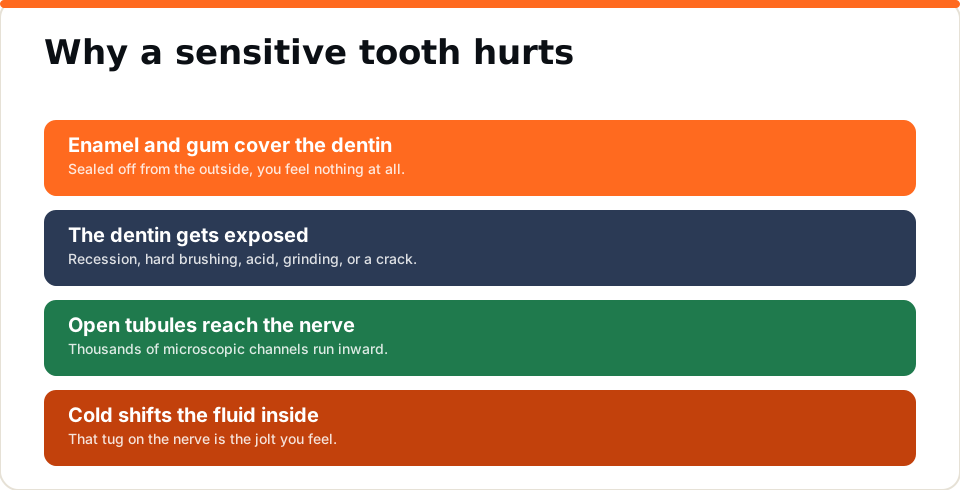
The outer shell of your tooth is enamel, the hardest substance your body makes. Below the gumline, the root is covered by a thinner, softer layer called cementum. Underneath both of them sits dentin, and dentin is not solid. It is threaded with thousands of microscopic channels, called tubules, that run inward toward the nerve at the center of the tooth.
As long as enamel and gum tissue cover the dentin, those channels stay sealed off from the outside and you feel nothing at all. When dentin gets exposed, the channels open up. Cold, heat, sugar, acid, even a puff of air from the dental chair, all of them shift the fluid sitting inside those tubules. That tiny movement tugs on the nerve, and your brain reads the whole event as a jolt.
That mechanism explains most of what patients describe to me. It explains why the pain is sharp rather than dull. It explains why it arrives instantly instead of building. It explains why it usually stops within a second or two once you swallow the ice water. It also explains why sensitivity comes and goes over months: the exposure is rarely constant, and the nerve inside a tooth can quiet down or flare up depending on what else is going on. If you want the anatomy in more depth, MedlinePlus has plain language overviews of tooth disorders and gum disease.
Hold onto the pattern, because it matters later. Sharp, brief, and clearly triggered by something usually points to exposed dentin. Pain that lingers, throbs, arrives on its own, or wakes you at night is a different animal.
Why teeth become sensitive in the first place
Your gums have pulled back. Roots have no enamel on them. When gum tissue recedes, from gum disease, from years of hard brushing, or simply from age, root surface gets exposed and the tooth suddenly has a soft, sensitive collar around its base. This is the single most common cause I see in adults over forty.
You brush too hard. Plaque is soft. It comes off with almost no pressure. Scrubbing does not remove more of it, but it does wear notches into the tooth right at the gumline and push the gums back over time. I can usually tell a hard brusher by looking, before they say a word.
Acid, from your diet or your stomach. Sparkling water, citrus, wine, sports drinks, coffee, kombucha, and soda all soften enamel temporarily. So does acid reflux, which many people have without knowing it. One lemon in your water is not the issue. Sipping something acidic across a whole workday keeps your teeth in an acid bath for hours.
You clench or grind. Most people who grind their teeth have no idea they do it, because it happens while they are asleep or while they are concentrating. Grinding flexes the tooth and wears the biting surfaces flat, and both of those expose dentin.
You have been whitening. Peroxide passes through enamel and irritates the nerve. This kind of sensitivity is usually temporary and reversible, but stacking strips night after night on already thin enamel makes it much worse.
You recently had dental work. A new filling, a deep cleaning, or a crown can leave a tooth touchy for a few days or a couple of weeks. That is normal healing. It should be getting better, not worse.
Something is cracked or decaying. A hairline crack, a filling that has come loose at the edge, or a cavity working its way into dentin will all announce themselves as sensitivity. This is the group that will not respond to toothpaste, and the reason a persistent sensitive tooth deserves an exam.
What actually helps at home
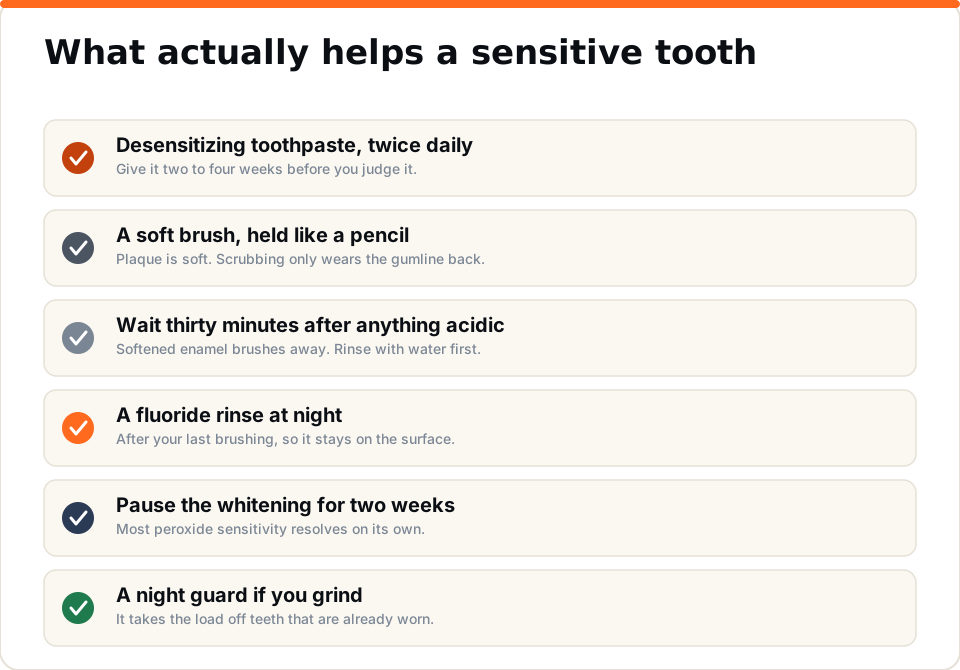
Use a desensitizing toothpaste, and use it correctly. The two ingredients with real evidence behind them are potassium nitrate, which calms the nerve, and stannous fluoride, which helps block the open tubules. Neither works overnight. Give it two to four weeks of twice daily brushing before you judge it. A trick that speeds things up: after you brush, squeeze a little paste onto a fingertip, rub it directly onto the sensitive spot, and do not rinse it off before bed.
Switch to a soft brush and change your grip. Hold the brush like a pencil, not like a scrub brush. Small circles, angled slightly toward the gumline, two minutes total. An electric brush with a pressure sensor is genuinely useful here, because it removes the guesswork about how hard you are pushing.
Give acid time to leave. After citrus, soda, wine, or vomiting, enamel is briefly softened and brushing right away scrubs some of it away. Rinse with plain water, wait about thirty minutes, then brush. If you sip something acidic all day, try to consolidate it into a shorter window instead.
Add fluoride. A fluoride rinse at night, after your last brushing, gives the enamel surface something to work with. If over the counter products are not cutting it, we can prescribe a higher strength paste.
Pause the whitening. If sensitivity started with strips or a whitening kit, stop for two weeks and see what happens. Most of it resolves. When you go back, go slower and use a shorter contact time.
Take grinding seriously. A custom night guard will not stop you from clenching, but it takes the load off the teeth and gives worn surfaces a chance to stop getting worse.
The habits that quietly make it worse
Some of the most common self treatments backfire. Charcoal pastes and baking soda scrubs feel like they are doing something, and that feeling is abrasion. On a tooth that is already sensitive because dentin is exposed, abrasive polishing is exactly the wrong move.
Chewing ice, pens, and hard candy puts sudden force on teeth that may already have hairline cracks. Sipping lemon water or sparkling water continuously through the day does more damage than drinking the same amount in ten minutes, because the acid exposure is what counts, not the volume.
Then there is the most common one: deciding to push through it. Avoiding cold on one side, chewing only on the other, skipping the area when you floss. All of that is very human, and all of it hides the problem from you while it continues. Teeth do not heal like skin does. A crack does not knit back together, and a cavity does not reverse once it has broken through into dentin.

When sensitivity is a signal, not a nuisance
Call a dentist, ours or anyone's, if any of the following is true:
The pain lingers. If it hangs around for thirty seconds or more after the cold is gone, that suggests the nerve itself is inflamed rather than simply reacting.
It hurts without a trigger. Pain that shows up on its own, throbs, or wakes you up at night is not ordinary sensitivity.
It is one specific tooth, every time. Generalized sensitivity across many teeth usually has a general cause. One tooth that reliably lights up is pointing at something.
It hurts when you bite down. Pain on pressure, especially a sharp zing when you release, is a classic sign of a cracked tooth.
There is swelling, a bad taste, or a pimple on the gum. That needs to be seen quickly.
New dental work still hurts after two to three weeks, or is getting worse instead of better.
Your gums bleed and are receding. Sensitivity riding along with gum disease needs the gum disease addressed, not a toothpaste.
What a visit for sensitivity looks like at Rivermark
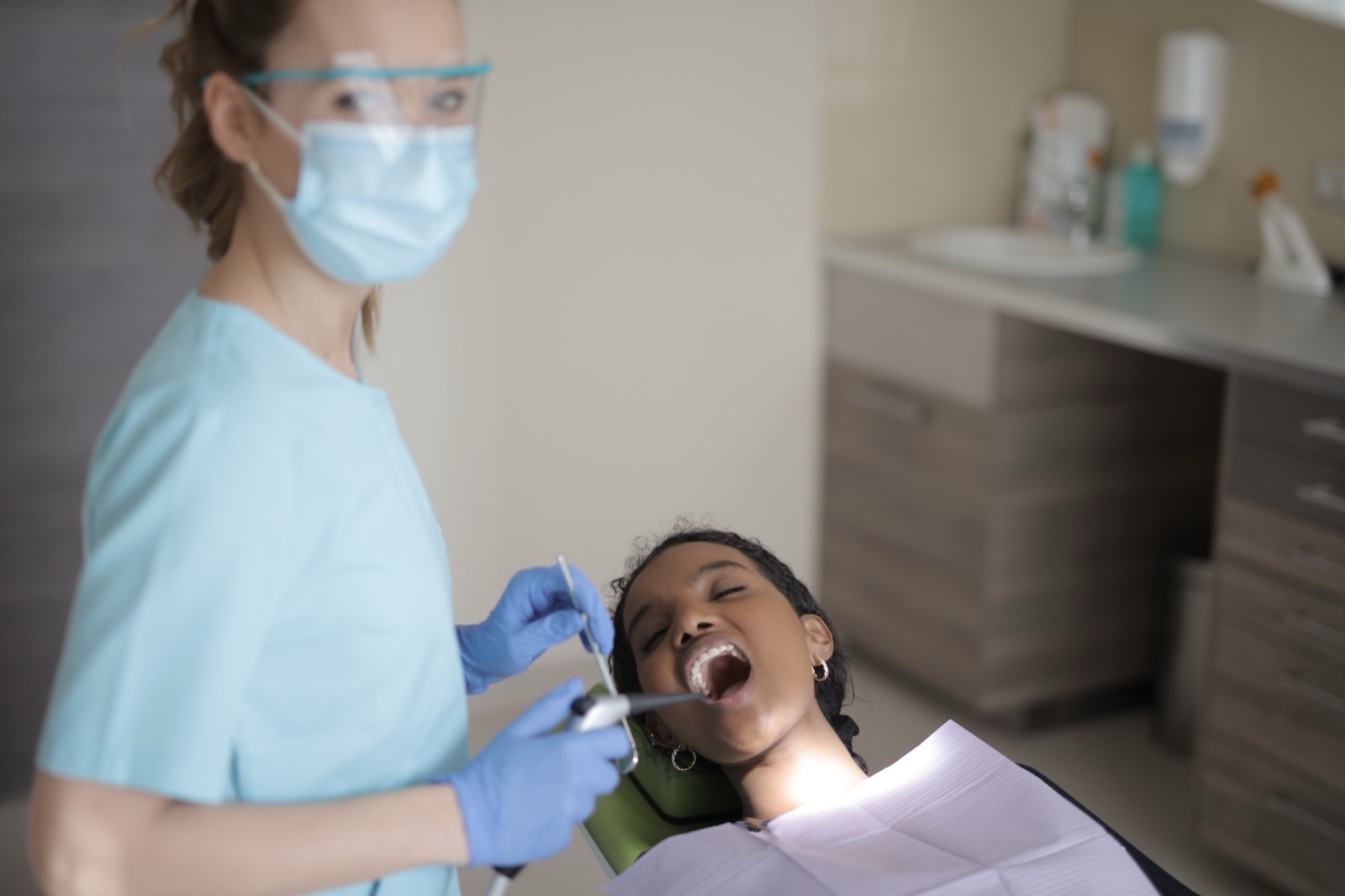
The first part is conversation, and it is genuinely the most useful part. What sets it off, how long it lasts, whether it is one tooth or a region, what changed recently. From there we test: cold on individual teeth to find the one that reacts, a bite test to check for cracks, X-rays to see decay and bone levels, and a look at your gumline for recession and wear notches.
Then the treatment matches the cause, which is the whole point. Exposed root surfaces often respond well to a fluoride varnish, applied in a few minutes. A worn notch at the gumline can be covered with bonding. A leaky filling gets replaced. Grinding gets a night guard. Significant recession may mean a referral to a periodontist. A tooth with an inflamed nerve may need a root canal, and finding that out early is much better than finding it out at midnight.
I want to be straightforward about expectations. Most sensitivity improves a great deal with conservative steps, and many people get relief from technique changes and the right toothpaste alone. Some cases take a couple of visits to pin down the exact tooth. Your mouth is yours, and what you need depends on what we find.
If your morning coffee comes with a wince, that is worth twenty minutes of someone's attention. Call Rivermark Family Dental in Fort Collins and tell the front desk you want a sensitivity check. Bring the details: which side, which trigger, how long it has been going on. We will figure out what your teeth are telling you.
This article is general health information and is not a substitute for individualized medical advice. Talk with your healthcare provider about your specific situation.