
Notes
Voice Search Local SEO: How to Make Sure Your Business Shows Up When People Ask Out Loud
Someone is driving between errands. They glance at the dashboard, tap the button on the steering wheel, and say, "Who does the best HVAC repair near me?" In about two seconds, their phone names three businesses out loud.
Reviewed by Melike Erguven, Co-founder of LocalLeadSignal · August 10, 2026 · 12 min read

Someone is driving between errands. They glance at the dashboard, tap the button on the steering wheel, and say, "Who does the best HVAC repair near me?" In about two seconds, their phone names three businesses out loud. The other forty businesses in that area stay completely silent. No list to scroll through, no second page to find. Just the names that made the cut, and everyone else.
That scenario is playing out millions of times a day across Google Assistant, Siri, and Alexa. Most local business owners have never thought about whether they show up for it. Some assume their website handles it. Others figure they rank fine in Google, so they must be fine for voice too. The truth is messier than that.
Voice search rewards a specific kind of local SEO readiness, and it punishes gaps that typed search sometimes forgives. The good news is that getting ready for it does not require starting from scratch. It requires getting the foundational work done well, and then layering in a few targeted moves that most businesses skip entirely.
This is a plain-language walkthrough of what actually changes when someone speaks a query instead of typing one, and how to make sure your business is in the running when it counts.
Why Voice Search Behaves So Differently from Typed Search
A typed search query looks like this: "plumber saint charles." Three words, no punctuation, no full thought. The person typing that knows Google will figure out what they mean. But spoken search queries are a completely different animal. Someone talking to their phone says, "Who is the best plumber open right now near me?" That is a full sentence with intent, context, and urgency baked right in.
That gap is not just about phrasing. It reflects how differently people communicate when they are speaking versus typing. Typing compresses. Speaking expands. And because voice queries tend to be longer, more specific, and more conversational, the signals about what that person actually wants, and when they want it, are much cleaner than a fragmented typed search.
That stronger intent signal matters a lot. A person who types "plumber" might be doing research. A person who asks "who can fix my burst pipe right now near me" is ready to call someone. Voice queries sit much closer to a buying decision, which is exactly why getting them right has real revenue consequences.
There is also the question of how results are delivered. A typed search hands you ten blue links and lets you pick. A voice assistant gives you one answer, maybe two. The stakes for being the chosen result are fundamentally higher. If you are not in the top position, there is no second position. You are just not mentioned.
The assistants doing the talking, Google Assistant, Siri, Alexa, do not guess at answers. They pull from structured local data sources, and Google Business Profile is the most important one. When someone asks for a recommendation, the assistant is largely cross-referencing what is on your profile, how many reviews you have, how complete your information is, and whether you rank well in local search.
There is also a meaningful overlap between voice search and AI-generated results that is growing. The conversational nature of voice queries is the same conversational format that tools like ChatGPT and Perplexity handle. Businesses that optimize for natural language search end up with a stronger footprint in both. If you want to go deeper on that connection, understanding how AI search surfaces local results is worth reading alongside this.
The Local SEO Foundations That Voice Search Depends On
Voice search does not give you a shortcut around local SEO fundamentals. If anything, it amplifies how much those fundamentals matter. A business with a weak foundation, inconsistent listings, an incomplete profile, sparse reviews, will get filtered out before the voice assistant even considers it.
NAP consistency is the starting point. NAP stands for name, address, and phone number, and every version of those details across every directory, citation, listing, and your own website needs to match exactly. Not roughly. Exactly. If your address says "Suite 100" on your website and "Ste. 100" on Yelp and nothing on your Google Business Profile, that inconsistency is a signal that something might be wrong. Voice assistants are cross-referencing sources to confirm accuracy before they surface a business, and conflicting data is a reason to skip you.
Google Business Profile optimization is the single highest-leverage thing most local businesses can do right now. According to Google's own guidance on improving local ranking, the completeness and accuracy of your Business Profile directly affects when and how you appear across Google Search and Maps. That means accurate categories, current hours including holiday exceptions, service areas if you go to customers rather than having them come to you, photos, and a description that actually explains what you do. A half-filled-out profile is a real liability for near me voice search results.
Local citations matter here too. A citation is any mention of your business's name, address, and phone number on an external site, whether that is a directory, a local chamber listing, or a vertical-specific platform. Voice assistants do not rely on a single source of truth. They compare data across multiple sources. Businesses with clean, consistent citations across a broad set of directories are simply more trustworthy to the algorithm. Citations and backlinks serve different purposes in local SEO, but citations specifically function as a verification layer, and that layer is what voice search leans on.
Google Map Pack ranking is where this all comes together. The Map Pack, those three local business listings that appear above the organic results, is the primary pool voice search pulls from for location-based queries. If you are not in the Map Pack, you are unlikely to be named out loud. Building toward Map Pack ranking through profile completeness, NAP consistency, review signals, and citation strength is not just good local SEO hygiene. It is the foundation of your voice search strategy. A solid footprint in these areas also carries over into AI visibility for local business, since AI assistants pull from many of the same signals.
How to Write Content That Answers the Way People Actually Talk
Most business websites are written to impress, not to answer. Dense service descriptions, jargon-heavy paragraphs, feature lists that say nothing specific. None of that is what a voice assistant is looking for when someone asks, "Is this dentist accepting new patients?" or "What does a roof inspection cost in my area?"
Question-based content is one of the most practical things you can add to a local business website. That means building pages, sections, or dedicated FAQ areas around the specific questions your customers actually ask out loud. Not the questions you wish they would ask. The real ones. "Do you offer same-day service?" "Are you open on weekends?" "How long does a typical appointment take?" These feel simple, but they are exactly the conversational search queries that voice assistants are trying to match to a result.
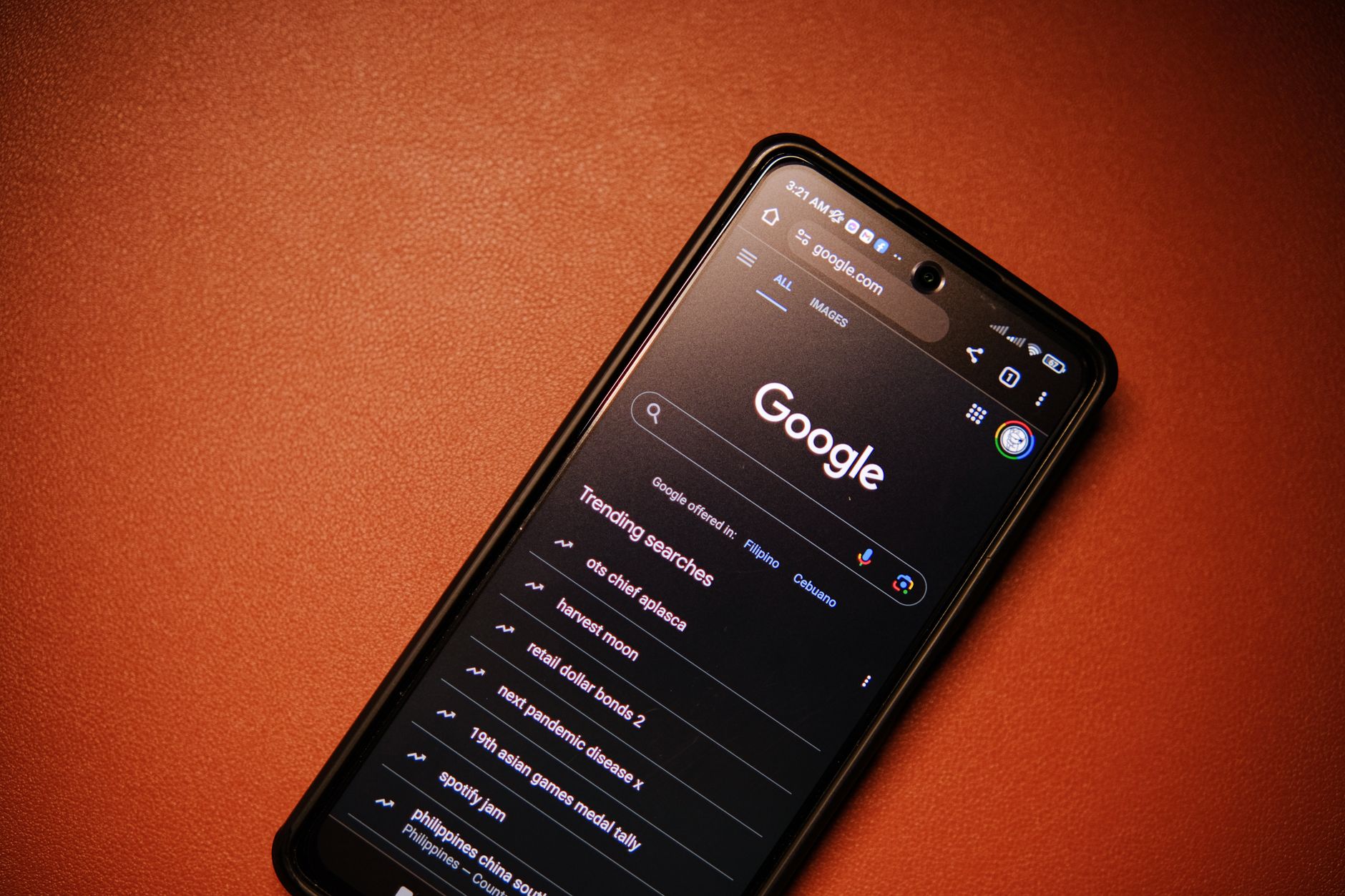
The phrasing of your content matters more than most people realize. Consider how someone types "dentist hours" versus how they speak: "What time does this dental office close on Fridays?" Your site content, especially FAQ sections and service page descriptions, should mirror the spoken version. That is not about stuffing long-tail local keywords into every sentence. It is about writing in a voice that matches how your customers actually talk.
Local keyword research for voice should specifically target long-tail, conversational phrases. Generic keywords like "HVAC service" are typed shortcuts. Spoken queries are specific: "who can service my furnace before the weekend?" Running your keyword research through the lens of natural language search changes which phrases you prioritize. The conversational ones are longer, lower competition, and much closer to buying intent.
From a formatting standpoint, the featured snippet is the brass ring. Featured snippets are the boxes Google highlights at the top of search results with a direct answer, and they are often the exact text a voice assistant reads aloud. To compete for featured snippets, your answers need to be clear, concise, and structured. A question as a subheading followed by two to four sentences of direct answer is the pattern that tends to win. Bullet points work for list-based answers. The key is that your answer genuinely resolves the question without making the searcher dig further.
Content written this way also performs well in AI-generated answer summaries. The same clarity and structure that earns a featured snippet makes your content easy for a language model to cite. You are not writing for two separate audiences. You are writing once and winning twice.
Schema Markup: The Behind-the-Scenes Signal Voice Search Loves
If you asked most business owners whether they have schema markup on their website, most would not know the answer. That is completely understandable. Schema lives in the code layer of your site, invisible to anyone browsing normally. But to a search engine, it is one of the clearest signals you can send.
Schema markup is structured data: code that explicitly tells search engines what your business is, where it is, what services you offer, and how to reach you. Rather than making Google guess by reading your page like a human would, schema hands the answer over directly. Google's documentation on how search works makes clear that structured data helps Google better understand page content, and for local businesses, that understanding translates to better eligibility for rich results and voice answers.
For service businesses, the baseline is LocalBusiness schema. It establishes your business type, physical location, hours, service area, and contact details in a structured format. Beyond that, Service schema helps clarify what you specifically offer, which is useful when someone asks a question as narrow as "do they handle commercial HVAC repairs?"
FAQPage schema is a particularly high-value addition. When your FAQ content is marked up with FAQPage schema, Google can read and surface individual question-and-answer pairs directly in search results. Those pairs are exactly what voice assistants reference when delivering a spoken answer. An FAQ section with good schema is not just a convenience for site visitors. It is a direct-answer feed that voice search results and AI overviews both draw from.
Schema also matters beyond Google. Bing Places local SEO performance gets a lift from structured data, and AI assistants that pull from Bing's index, including Alexa and Copilot, benefit from the same markup. The work is not Google-specific.
The practical takeaway is this: most business owners do not need to hand-code schema. But someone needs to make sure it is implemented correctly and kept current as your services and hours change. Letting it sit broken, or never implementing it at all, means leaving one of your clearest ranking signals unused.
Reviews and Reputation: A Voice Search Ranking Signal You Cannot Ignore
Here is a situation that plays out constantly. Two businesses in the same town offer the same service. One has a 4.7-star rating with over 200 reviews. The other has a 3.9-star rating and 12 reviews. When someone asks their phone to recommend a local provider, the first business wins almost every time. Not because of their website. Because of their reputation.
Voice assistants use review signals as part of how they evaluate which business deserves the top recommendation. Star rating matters. Review volume matters. Recency matters too, a flood of reviews from three years ago with nothing recent sends a weaker signal than a steady stream of new ones. All of this feeds into how prominently a business surfaces in voice and local search results.
Getting more Google reviews is therefore a legitimate voice search strategy. Not a nice-to-have. A direct ranking lever. The businesses that treat review generation as an ongoing process, asking after a job well done, following up with customers, making it easy to leave a review, tend to build the kind of profile that voice assistants prefer. Google's guidelines for representing your business emphasize providing accurate information and building trust with users, and a healthy review profile is a core part of that trust signal.
Responding to reviews matters too, including the negative ones. A business that replies thoughtfully to criticism is demonstrating accountability. The algorithms that power Google Assistant local SEO and Siri local business results factor in engagement signals like this. Beyond the algorithmic benefit, there is a practical one: potential customers read those responses.
Online reputation management is not a one-time project. It is ongoing, the same way customer service is ongoing. The businesses that treat it that way maintain a compounding advantage over time, because their review count grows while competitors who do nothing see their profiles stagnate.
LocalLeadSignal includes review management as part of its core service. Clients are not left to remember to ask for reviews or figure out how to respond to a one-star rating on their own. That consistent attention to reputation is part of what makes the service genuinely useful rather than just a reporting dashboard.
Source: Pew Research Center, 2025
A Practical Checklist for Voice Search Local SEO Readiness
If you want a clear picture of where your business stands, here are the areas to look at, in order of how often they are left incomplete.
Google Business Profile: Verified, fully filled out, with accurate categories, service areas, current hours, and at least a few recent photos. This is the foundation everything else builds on.
NAP consistency: Your business name, address, and phone number should be identical everywhere they appear, your website, every directory listing, every citation source. Exact, not approximate.
Local business schema markup: LocalBusiness schema should be live on your site. If you have a FAQ section, FAQPage schema should be implemented on that content too.
FAQ content written in natural spoken language: At minimum, one FAQ section per core service page that answers the questions customers actually ask out loud. Conversational phrasing, concise answers, structured format.
Review volume and recency: Aim for a strong star rating and a consistent flow of new reviews, not a batch from two years ago and nothing since.
Mobile site speed: Voice queries are almost always made on a mobile device. If your site loads slowly on a phone, you are losing the race before it starts.
At least one long-tail content piece per core service: A page or section built around a specific conversational query related to each service you offer. Think "what to expect during a furnace tune-up" rather than just "HVAC services."
Running through these items yourself is possible, but a full local SEO audit will surface gaps you might miss on your own, especially around schema implementation, citation consistency, and technical site performance.
For business owners who want all of this handled without building an in-house marketing team or writing a large agency check, that is exactly what LocalLeadSignal was designed for. Every item on that checklist, from profile management to citations to reviews to schema, is part of what gets done for you, starting at $249 a month with no contract. You can see exactly what is covered.
Voice search is not a separate discipline that requires rebuilding everything you have already done. It rewards the businesses that have done the foundational local SEO work well, and it sidelines the ones who have let the basics slide. The gap between showing up when someone asks out loud and being completely invisible often comes down to a handful of fixable things: a fully optimized Google Business Profile, clean and consistent citations, schema markup, content written the way real people talk, and a review profile that signals trust.
None of that is out of reach. But it does take consistent attention, and most business owners already have a full plate before adding any of this. If that sounds familiar, see what LocalLeadSignal handles for you starting at $249 a month, no contract required.
Frequently asked questions
- How is voice search different from regular local SEO?
- Voice search queries are longer and more conversational than typed ones, and they typically return a single answer rather than a list. This means your business needs to rank in the top local result and have clearly structured, question-style content so voice assistants can read your answer aloud with confidence.
- Does my Google Business Profile affect my voice search ranking?
- Yes, significantly. Voice assistants pull heavily from Google Business Profile data when answering local queries. A complete, accurate, and well-reviewed profile improves your chances of being the business that gets named when someone asks for a recommendation out loud.
- What kind of content helps my business show up in voice search results?
- FAQ-style content written in plain, conversational language works best. Think about how a real customer would ask a question out loud and write a concise, direct answer. Pairing that content with FAQPage schema markup gives search engines and voice assistants an easy signal to pull from.
- Do Google reviews help with voice search?
- They do. Review volume, recency, and star rating are all factors voice assistants weigh when choosing which local business to recommend. A business with more positive reviews and recent activity is more likely to be named in response to a spoken query than a competitor with fewer or older reviews.
- Can a small local business realistically optimize for voice search without a marketing team?
- Absolutely. Voice search readiness builds on foundational local SEO tasks like consistent listings, a strong Google Business Profile, schema markup, and good reviews. A done-for-you service like LocalLeadSignal handles all of this starting at $249 a month, no contract, so you do not need an in-house team.
See where your own business stands.
We measure your local rankings, your listings, your website, and how AI assistants answer for your business. No signup required.
Or jump straight to pricing →