
Notes
How to Refresh an Underperforming Blog Post and Actually Get Results From It
You published a blog post about your services, maybe a year ago, maybe two. For a while it pulled in a small but steady stream of visitors. Then slowly, almost without you noticing, the traffic dried up.
Reviewed by Melike Erguven, Co-founder of LocalLeadSignal · September 18, 2026 · 12 min read
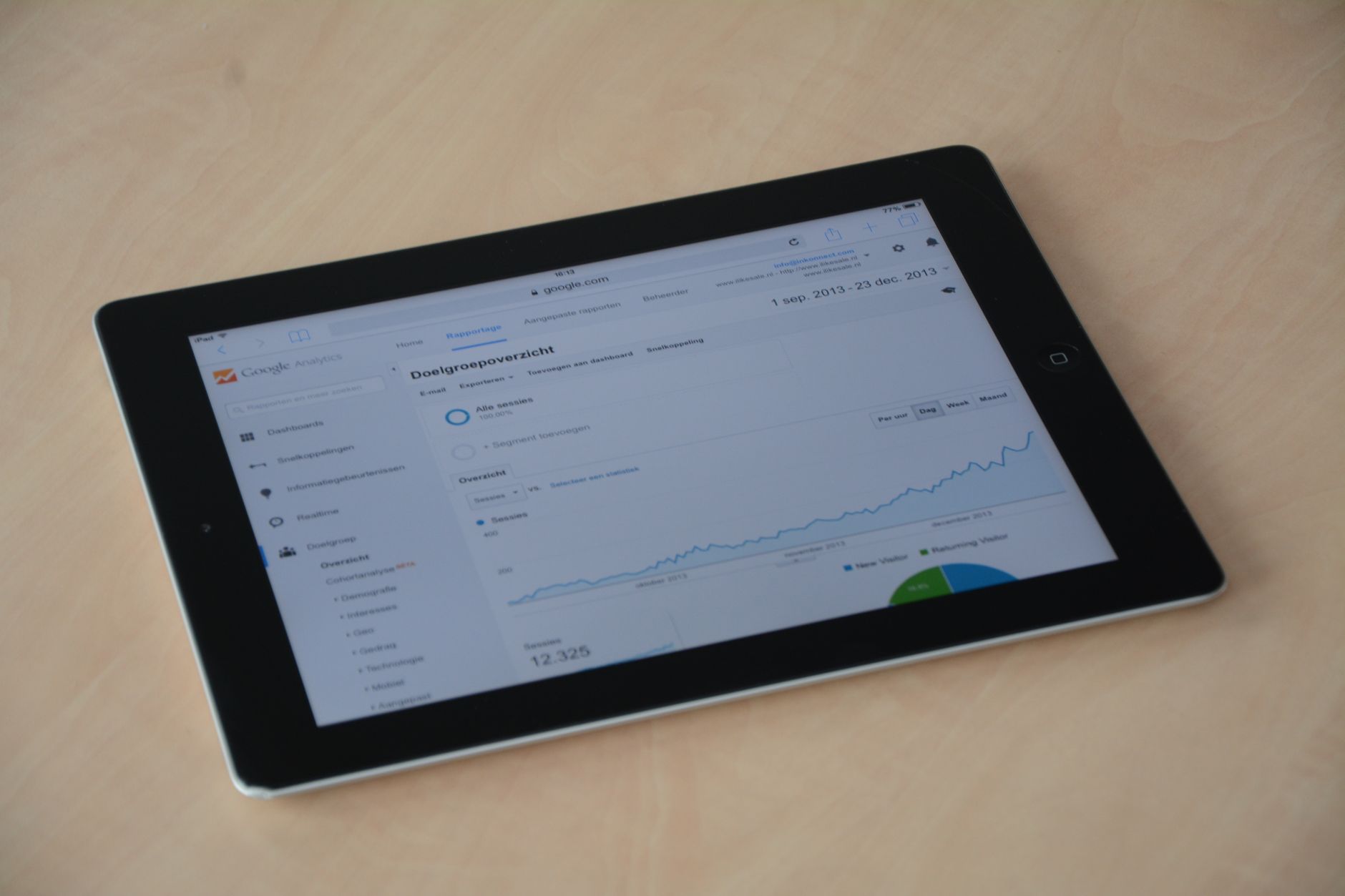
You published a blog post about your services, maybe a year ago, maybe two. For a while it pulled in a small but steady stream of visitors. Then slowly, almost without you noticing, the traffic dried up. Now it sits in your Google Search Console like a polite reminder that something went wrong, but nothing about the post itself tells you what.
The instinct at that point is usually one of three things: delete it, rewrite the whole thing from scratch, or leave it alone and hope it recovers on its own. None of those is usually the right move. The real problem tends to be a misdiagnosis, not a bad piece of writing. And fixing the wrong thing costs time you do not have.
This piece works through the most common beliefs business owners hold about underperforming content, what is reasonable about each one, and what the evidence actually shows about what makes a refresh work.
Belief: If a Post Is Not Ranking, the Problem Is Probably the Writing
There is something to this. Thin content, walls of unbroken text, and posts that never quite answer the question they promise to address do suppress rankings. Google has gotten very good at understanding whether a page is genuinely useful, so prose quality is not irrelevant.
But in most cases, the writing is not the primary culprit. The more common causes are structural and signal-based, and they are fixable without scrapping what you wrote.
Keyword drift is one of the biggest. The way people search for a topic shifts over time. A post that was a solid match for search intent eighteen months ago may now be targeting phrasing that fewer people actually use, while the queries that are gaining volume go unanswered. Local keyword research is not a one-time task. What someone in your service area types into Google to find a chiropractor, a family law attorney, or a physical therapist changes as language evolves, as competitors publish, and as AI-generated summaries reshape what shows up above the organic results.
Beyond keyword drift, weak internal linking is a consistent underperformer that gets almost no attention. A post with no internal links pointing to it looks like an orphan to Google's crawler. It gets crawled less frequently, and without internal signals suggesting it is important, the ranking boost it deserves never arrives. Pair that with missing schema markup, a title tag that no longer reflects how people are searching, or outdated information that Google deprioritizes in favor of fresher sources, and you have a post that is dragging not because of the sentences inside it but because of the scaffolding around it.
The right analogy is a house inspection. You would not repaint the exterior before knowing whether the foundation is solid. Diagnosing before rewriting is the move, and for local businesses specifically, that diagnosis often reveals that a service-area post is underperforming because local keyword targeting has drifted, not because the prose is bad. Long-tail local keywords, the specific phrases that signal high purchase or booking intent, tend to shift more than broad informational terms do. A post that was built around one version of that language may need retargeting more than rewriting.
Belief: The Best Fix Is to Rewrite the Whole Thing From Scratch
Sometimes a full rewrite is genuinely the right call. If a post has drifted so far from its original purpose that the URL and title are the only things worth keeping, or if the information is so outdated it could actively mislead a reader, starting over makes sense.
Most of the time, though, a full rewrite is overkill and can actually work against you. Google has already indexed the existing content. Any backlinks pointing to the post, any crawl history, any behavioral signals from previous visitors, those are attached to the URL and the content as it exists. A complete replacement wipes out a lot of that context, and rebuilding it takes time.
A better framework is a three-tier content triage:
Refresh in place. Keep the URL, keep the core structure, and update what needs updating. Swap out stale statistics for current ones. Tighten the H2 structure so it maps more cleanly to the questions people are actually asking. Add a FAQ section designed to hit the kinds of queries that show up in AI Overviews. This is the right move for most underperforming posts because it improves the page without throwing away whatever Google already knows about it.
Restructure. The URL and the core topic stay, but you rebuild the sections substantially. This is appropriate when the post's framework is outdated but its topic is still relevant and the URL has some authority worth preserving.
Replace. New content at the same URL, potentially with a redirect from an old version, but only when the topic has fundamentally changed and no amount of editing would get the existing post where it needs to go.
Knowing which tier a post belongs in is where a quick audit of your profile and content signals can save you a lot of time. Without that diagnostic step, most people default to the full rewrite because it feels like the most decisive action. It often is not.
Adding FAQPage structured data during a refresh in place is a good example of a high-value, low-effort improvement. It signals to Google that the page explicitly addresses specific questions, and it improves AI Overview eligibility without requiring you to rewrite anything that was already working. The same logic applies to local business schema markup: adding it to an existing post costs far less time than rebuilding the post, and it gives Google clearer signals about what your business does and where.
One more thing worth emphasizing. Links pointing to the old post, from your own pages or from other sites, keep working when you refresh in place. Moving the post to a new URL breaks them unless you set up a redirect.
Belief: Updating the Publish Date Is Enough to Signal a Refresh to Google
Fresh dates do matter, a little. For certain query types, especially news, events, or anything where recency is part of what the searcher wants, a recent publication date can influence whether someone clicks your result. That is a real effect and not worth dismissing entirely.
The problem is that Google crawls the actual content delta, not just the timestamp. A date change with no meaningful change in the content underneath it does not tell Google anything useful. At best it is neutral. At worst it is exactly the practice Google's guidance warns against, which is the last thing you want when you are trying to rebuild ranking signals on a struggling post.
What Google is actually looking for when it recrawls a page is substantive change: new semantic coverage, updated facts, added sections that answer related queries the page was not previously addressing, schema additions that help the structured data layer communicate page intent more clearly. Google's guidance on creating helpful content asks site owners directly whether they are changing the date of pages to make them seem fresh when the content has not substantially changed.
For AI search specifically, this distinction is even more important. Tools like ChatGPT, Perplexity, and Gemini pull from content that is substantively informative and well-structured. They are not looking at your publish date when deciding whether to cite a page. A genuinely refreshed post, one with updated information, clear structure, and answers that are specific enough to be directly useful, improves AI visibility in ways a date swap never will.
A practical way to think about this: a substantive update adds information a reader would notice. A cosmetic update changes something a reader would not. Fixing a broken link is cosmetic. Adding a new section that answers a question the post previously left unanswered is substantive. Rewording a paragraph without changing what it says is cosmetic. Adding local schema markup that was previously missing is substantive. If you are refreshing a post with the goal of better generative engine optimization and real AI search citation, aim for changes that a careful reader would actually see and value.
Belief: A Refreshed Post Will Start Ranking Again Within a Few Days
Reindexing can happen quickly. For sites with good crawl frequency, Google can pick up a content change within days of it going live. If you submit the URL through Google Search Console after making your updates, that timeline can be even shorter. So there is something real in this belief.
The gap is between recrawling and re-ranking. Those are two different things, and conflating them leads to a lot of frustration.
There is no fixed timeline. Google does not publish one, and it depends on how competitive the search is and how much the page actually changed. Compare the same queries over equal periods before you judge the refresh. A post that got a date change and a few new sentences gives Google far less to reconsider than one that received new sections, updated schema, internal link additions, and retargeted H2s.
Some refreshed posts plateau without ever recovering to their previous performance, and it is usually for one of a few reasons. The keyword is too competitive and the page lacks the authority to rank for it. The page still has no meaningful internal links pointing to it. The search intent was never properly addressed, so Google keeps preferring pages that answer the question more directly. Or the refresh was mostly cosmetic and did not give Google enough new signal to revisit where the page belongs.

This is why the monitoring layer matters as much as the refresh itself. After you publish an update, track search impressions, average position, click-through rate, and time on page. Those four metrics together tell you a clear story. If impressions are growing but click-through rate is flat, the title tag or meta description probably needs work. If click-through rate improves but time on page stays low, the content is not holding attention once visitors arrive.
Long, specific local phrases usually face fewer competing pages than broad how-to searches, so they are a sensible place to start. Search Console shows impressions and position per query, so you can watch those phrases directly after a refresh.
Belief: SEO and Content Refresh Are Two Separate Workflows That Do Not Need to Talk to Each Other
Content teams often do operate separately from whoever handles SEO. And a purely editorial pass, tightening sentences, improving flow, fixing factual errors, can improve the reading experience without any SEO input at all.
The issue is that the highest-impact refreshes treat content and SEO as one integrated workflow, because everything you add, restructure, or remove has direct ranking consequences. Separating those decisions means you are making SEO choices without knowing it, and usually not the right ones.
An integrated refresh starts before you write a single new sentence. Keyword gap analysis first: what is the full range of queries this post could plausibly address, and which of those gaps are currently unfilled? Then H2 restructure to match the complete query landscape, not just the central topic. Then schema markup addition, whether that is FAQPage for posts that answer discrete questions, HowTo schema for process-oriented content, or local business schema for service-area pages that tie back to a physical location. Then an internal link audit: what does this post link to, and more importantly, what high-authority pages on your site should be linking back to it?
The local business angle adds another layer. A service-area post refresh should include a check on NAP consistency, making sure the name, address, and phone number referenced anywhere in or around the post match what is on your Google Business Profile and across your local citations. It should review whether the post is linked from high-authority local assets, and whether the local link building signals pointing at your site in general are helping this post or bypassing it entirely.
Google's guidelines for representing your business ask that your name, address and phone number match how your business is known in the real world. A refresh that repeats different details than your profile works against that.
Most solo operators fall behind on this not because they lack effort but because they are managing SEO, listings, reviews, and content without a system connecting them. The local SEO audit checklist for a content refresh looks very different from a general editorial checklist, and if the two never intersect, the refresh will underperform relative to what it could do.
Whoever does the work, handle these as one workflow. Rather than treating content refresh, Google Business Profile optimization, citation management, and link signals as separate projects that occasionally coordinate, you handle them as one continuous workflow. The post update and the profile signal and the schema addition happen together, not in separate quarters whenever someone has bandwidth.
Belief: Once You Have Refreshed a Post, You Can Move On and Leave It Alone
Evergreen content on stable topics can hold rankings for a long time after a well-executed refresh. That is true, and for some posts, the maintenance window really is long. A post about how a service works, or what to expect from a first appointment, or why a particular type of business needs local SEO, does not change its fundamental premise every six months.
What does change is search behavior. Competitors publish new content. AI search engines shift what they surface and how they structure results. A query that used to reliably surface your post in position four may now produce an AI Overview that answers the question before the organic results appear, which means your post needs to be structured for AI Overview eligibility, not just traditional organic ranking.
A quarterly content review rhythm handles this without creating a constant maintenance burden. Check impressions and average position every quarter. Flag posts that show early decline, a slow drop in impressions before the traffic has actually fallen off, because catching it early means a smaller update, not a full triage cycle. Make smaller ongoing updates rather than waiting for full underperformance to return.
The generative engine optimization layer makes this even more relevant. Posts that rank well in traditional search may not be getting cited by ChatGPT or Perplexity, and the structural requirements for AI search citation are somewhat different from what wins a featured snippet. Clear headings, specific answers, well-organized FAQs, and explicit context about who the information is for, those qualities help both. But a post that was built entirely for traditional ranking may need a few additions to show up meaningfully in generative search results.
It helps to treat a content library as a living asset. A smaller library that is reviewed regularly is easier to keep accurate than a large one nobody revisits. Online reputation management, local visibility, and content freshness are all part of the same continuous system. The posts that stay stuck are usually the ones whose owners refreshed once, moved on, and forgot to look back until the rankings had already cratered again.
The pattern across all of these beliefs is the same: the post is stuck because the owner diagnosed the wrong problem. They rewrote prose when they needed to fix structure. They swapped a date when they needed to add semantic depth. They hit publish on a refresh and walked away when the post needed a monitoring plan and a quarterly check-in.
A good refresh starts with an honest look at what is actually wrong, not what feels wrong. Before you spend another afternoon rewriting, check which signals the post is missing. Our free local SEO audit is a quick way to see where your site stands before you decide what to change.
Frequently asked questions
- How do I refresh an underperforming blog post for local SEO?
- Start with a keyword gap analysis to see how search intent has shifted since the post was published. Then update the H2 structure, add or correct schema markup, fix internal links, and make sure the content answers the full range of related queries. Refreshing signals matters more than rewriting prose from scratch.
- Does updating the publish date help a blog post rank better?
- Not on its own. Google's guidance on helpful content specifically questions changing a page's date when the content has not substantially changed. Real updates to facts, structure, and coverage are what give Google something new to evaluate.
- How long does it take for a refreshed blog post to rank again?
- There is no fixed timeline, and Google does not publish one. It depends on how competitive the search is and how much the page changed. Compare the same queries in Search Console over equal periods before and after the refresh.
- Will refreshing a blog post help it show up in ChatGPT or AI search results?
- It can help, but the update needs to go beyond cosmetic edits. AI tools like ChatGPT and Perplexity tend to draw on content that is well structured, factually current, and answers specific questions clearly. A FAQ section, a tighter H2 structure, and schema markup make the answers easier to find and quote.
- How often should I review and refresh blog posts?
- A quarterly content audit is a practical rhythm for most small businesses. Check search impressions and average position for your top posts every three months and flag any showing early decline. Smaller ongoing updates are easier to manage than waiting until a post has fully stopped performing.
See where your own business stands.
We measure your local rankings, your listings, your website, and how AI assistants answer for your business. No signup required.
Or jump straight to pricing →