
Notes
What a Local SEO Audit Actually Looks At (And What to Do With the Results)
A local SEO audit is a structured review of everything that affects whether your business shows up when someone nearby searches for what you offer.
Reviewed by Melike Erguven · June 17, 2026 · 8 min read
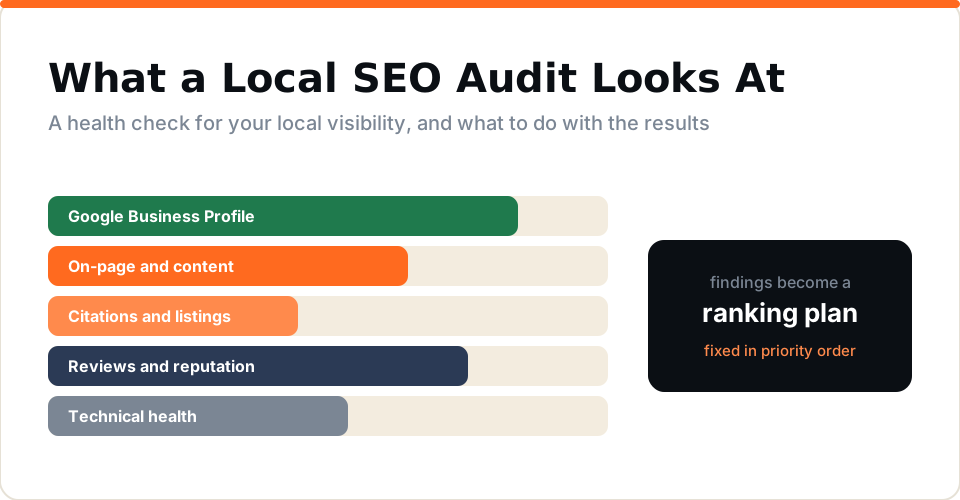
A local SEO audit is a structured review of everything that affects whether your business shows up when someone nearby searches for what you offer. It is not a technical exercise for developers, and it is not a report full of numbers that never connect to results. It is a diagnostic tool, the equivalent of a health check for your online visibility.
Most people now start their search for a local business online, yet most owners have never looked under the hood of their own presence. They set up a Google Business Profile, built a website, and hoped things would work out. Sometimes they do. Often they do not. That gap is exactly what a local SEO audit is designed to close. This guide is a plain language walkthrough of what an audit actually checks, how to make sense of the results, and what to do next.
What a local SEO audit is, and why it matters
It helps to separate a local SEO audit from a general technical audit, because they are related but not the same. A technical audit focuses on site code, crawlability, and server performance. Those things matter, but a local audit goes further into the signals that specifically drive map pack rankings: your Google Business Profile, your citation consistency, your review signals, and the proximity and relevance cues that tell Google your business is the right answer for someone nearby.
The difference between local and national SEO is significant for service businesses. You do not need to outrank every competitor in the country. You need to outrank the handful of businesses serving the same area you serve. Local SEO is a different competitive game, and the audit reflects that by focusing on local signals rather than broad domain authority. Our complete local SEO guide for 2026 covers that foundation in full.
One framing note worth keeping in mind: an audit is a diagnosis, not a fix. Getting a list of findings is step one. Acting on those findings consistently over time is where rankings actually move. If someone sells you an audit and then disappears, the audit was not worth much.
The five core areas every audit covers
A thorough audit does not just check one thing. It looks across five interconnected areas, because local visibility is built from multiple signals working together. A problem in any one of them can quietly suppress your rankings even when everything else looks fine.
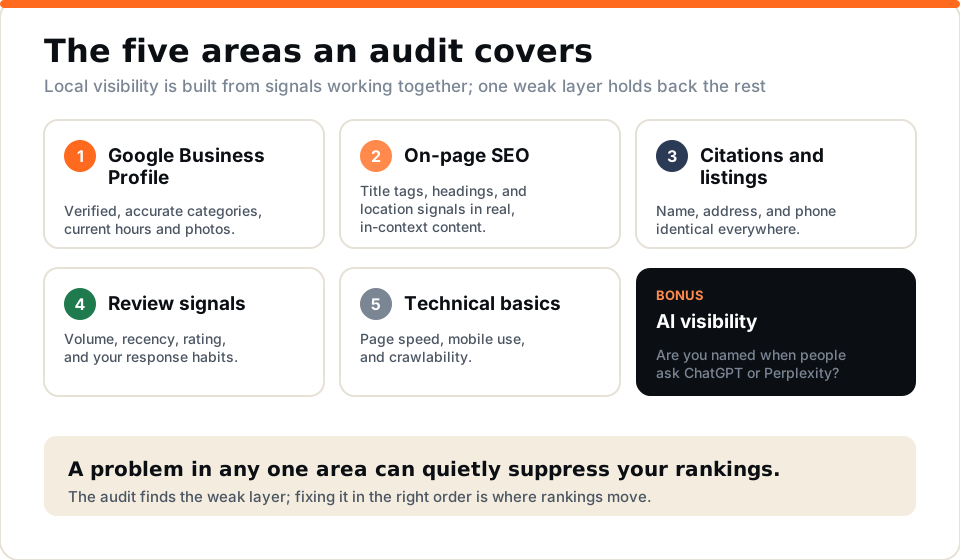
- Google Business Profile. Often the first thing a customer sees, and one of the strongest local ranking signals. The audit checks whether the profile is verified, whether categories are accurate, whether hours are current, and whether photos are recent.
- On-page SEO. The content and structure of your pages: title tags, meta descriptions, heading structure, and whether location signals appear naturally in your copy rather than stuffed into a footer. If your site reads like it could belong to a business in any city, Google has no strong reason to show it locally.
- Citations and listings. Whether your name, address, and phone number appear identically across every directory. If your address is written one way in one place and another way somewhere else, those inconsistencies send conflicting signals. Cleaning them up is one of the most underrated fixes in local SEO.
- Review signals. Google weighs the volume of your reviews, how recent they are, your average rating, and whether you respond. If you have a dozen reviews and a competitor has a hundred and forty, that gap shows up in rankings.
- Technical basics. Page speed, mobile usability, and crawlability all affect rankings even in local search. A slow or broken site does not rank well, regardless of how strong your other signals are.
There is also a newer area worth checking: AI visibility. When someone asks ChatGPT or Perplexity for a local recommendation, is your business mentioned? Most audits do not check this yet, but it is a growing part of local search, and we cover it in AI visibility for local business.
How to read your results without getting overwhelmed
If you have ever received an SEO audit report, you know the feeling. Pages of findings, color coded severity flags, a long list of things that are apparently broken. It is easy to look at that and feel like the situation is hopeless. It is not. A long list just means the audit did its job.
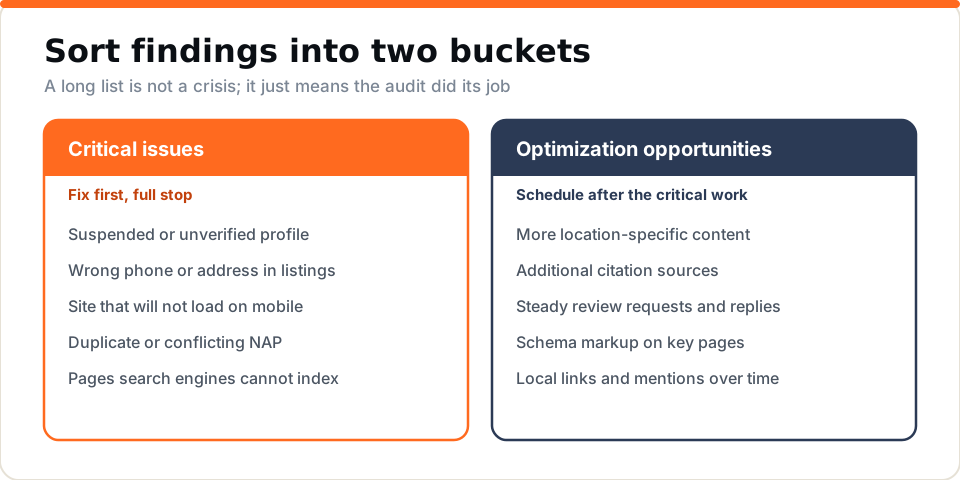
The most useful thing you can do is sort findings into two buckets. Critical issues are things actively hurting your rankings right now, like a suspended profile, a wrong phone number on an important listing, or a site that will not load on a phone. These get fixed first, full stop. Optimization opportunities are improvements that lift rankings over time, like adding more location specific content or building additional citations. Those get scheduled after the critical work is done.
It also helps to translate jargon into plain English. "Inconsistent NAP" means your name, address, or phone number does not match across directories, which makes it harder for Google to confirm your details. "Thin content" means a page does not have enough useful information to rank, often because it was built as a placeholder. Neither is catastrophic, and both are fixable.

DIY versus hiring someone: an honest look
Free tools exist, and they are genuinely useful. Google Search Console shows which queries bring people to your site and flags crawl errors. Google Business Profile Insights shows how often your listing appeared and what people did next. PageSpeed Insights gives you a performance score and a list of what is slowing your site down. A motivated owner can open all three in an afternoon and learn a lot.
The honest limit is this: knowing what is broken and knowing how to fix it are two different skill sets, and fixing it consistently across dozens of directories, on top of running an actual business, takes time most owners do not have. That is not a failure. It is reality.
There are also things a professional audit catches that free tools miss. Citation inconsistencies scattered across smaller directories do not show up in Search Console. Fake listings created to outrank you require manual checking. AI visibility gaps are not in any tool you can run yourself yet. On cost, most providers start at $500 or more per location and assume you already have a marketing team. LocalLeadSignal starts at $249 a month with no contract, and that price covers the audit and the ongoing work: tracking, listings, reviews, and AI visibility.
What happens after the audit: turning findings into rankings
The audit gives you a map. The work that follows is the journey, and it tends to run in a clear order.
First, fix the critical errors: broken profile information, inconsistent citations, and mobile usability problems. You cannot build rankings on a cracked foundation. Then strengthen what is already there with on-page work and keyword aligned content, making sure your service pages are structured correctly and answer real questions. Citation and listings management is ongoing, not a one time task, because directories change and inconsistencies creep back in. Review management follows the same logic: ask regularly, respond to every review, and keep recency high. Off-page authority, meaning links and mentions from other sites, is a later stage lever that works best once the local foundation is solid.
On timing, foundational fixes typically begin reflecting in rankings within sixty to one hundred and twenty days. That is not a delay, it is how search engines recrawl and re-evaluate. The quickest levers are profile completeness, review velocity, and citation fixes. Authority building is a longer arc.
A note for healthcare and other sensitive verticals: search engines apply extra scrutiny to content that affects health or finances. The audit should flag whether a provider's site shows credentials, license information, professional bios, and reviewed dates on clinical content. Missing those is a priority, not an afterthought. Our piece on content strategy for medical practices goes deeper on that. If you want the foundation work in a runnable form, the local SEO audit checklist lays it out step by step.
You have already done the hard part
A local SEO audit is not about finding everything wrong with your online presence. It is about finding the right things to fix so your business shows up when someone nearby is ready to hire you. Most businesses that are not ranking are not doing anything catastrophic. They just have a handful of fixable issues quietly handing customers to competitors.
LocalLeadSignal exists for owners who do not have a marketing team down the hall. Starting at $249 a month with no contract, the service covers the audit and everything after it: tracking your visibility, managing your listings and citations, handling your review strategy, and making sure you show up in both traditional search and the AI tools people increasingly use to find local services. Get your free visibility check to see exactly where you stand, or compare plans and pricing when you are ready.

See where your own business stands.
We measure your local rankings, your listings, your website, and how AI assistants answer for your business. No signup required.
Or jump straight to pricing →