
Notes
UPL Law Firm Content Marketing: What to Publish, What to Avoid, and How to Get Found
Imagine a family law attorney who spends a Saturday afternoon writing a genuinely thoughtful blog post about how property division works during a divorce.
Reviewed by Melike Erguven, Co-founder of LocalLeadSignal · August 26, 2026 · 12 min read

Imagine a family law attorney who spends a Saturday afternoon writing a genuinely thoughtful blog post about how property division works during a divorce. It's careful, it's accurate, and it's exactly the kind of thing a nervous spouse searching "how is marital property divided" would find helpful. Then the emails start. Readers asking which assets they should hide before filing. A commenter wanting to know if they can take the kids out of state before the hearing. Suddenly the attorney is fielding questions that feel a lot less like "interested reader" and a lot more like "person who thinks they have legal representation."
This is the tension that sits at the heart of law firm content marketing, and it's the reason so many attorneys either publish nothing or bury every sentence under so many hedges that the content becomes useless. Being helpful enough to rank and being careful enough to protect your license feel like they're pulling in opposite directions. They don't have to be.
This is a practical guide for small and solo law firms that want to build real online visibility without doing anything that could put their license at risk. The goal isn't to scare you away from publishing, it's to show you how a clear editorial process makes consistent, safe, effective content marketing genuinely achievable.
Why Content Marketing Feels Risky for Law Firms (and Why That Stops Most from Starting)
Unauthorized practice of law, commonly called UPL, is a real professional concern, and it doesn't only apply to non-lawyers giving legal advice. Attorneys can run into UPL-adjacent territory when published content is specific enough that a reader reasonably interprets it as advice tailored to their situation rather than general education. The line isn't always obvious, which is exactly why it makes so many firms nervous.
The fear is understandable. A FAQ that walks someone through how to file a response to a lawsuit might feel helpful to write, but if a reader acts on it and gets hurt, the firm is in an uncomfortable spot. Blog posts about legal processes, guides on what to do after an accident, explainers on child custody standards, all of it can feel like a liability waiting to surface.
So what most firms do is publish almost nothing. Maybe a homepage, a practice areas page, and a bio. That's it.
The problem is that silence doesn't protect you from competition, it just hands market share to someone else. Legal aggregator sites like Avvo, Nolo, and FindLaw publish enormous volumes of legal content every month. Larger firms with dedicated marketing teams are doing the same. When a cautious solo practitioner publishes nothing, they're not avoiding the internet, they're just invisible on it while everyone else captures the searches their potential clients are already running.
The answer isn't recklessness, but it's not avoidance either. A clear editorial framework, one that distinguishes education from advice before anything gets published, is what actually resolves this. Firms that build that process produce content consistently, rank for the terms that matter, and don't cross professional lines doing it.

What Safe, Effective Law Firm Content Actually Looks Like
The most useful distinction to internalize is the difference between explaining how a process works and telling someone what to do in their specific situation. Educational content describes. Individualized legal advice prescribes. A blog post explaining what factors courts generally consider in child custody decisions is education. A paragraph telling a reader that "in your situation, you should request sole custody because" is something else entirely.
Safe content types for law firms are more varied than most attorneys realize. Consider how-the-process-works explainers: what happens at a first consultation, how discovery works in a personal injury case, what "no-fault divorce" actually means in plain language. Add "questions to ask before hiring a family law attorney" or "what documents to bring to a consultation" and you've got genuinely useful content that doesn't put anyone at risk.
Tone carries more weight than most firms give it credit for. Conversational and informative is fine. Prescriptive is where the trouble starts. Language like "you should," "you must," or "you need to immediately" pushes content from explanation into direction. Swap those phrases for "many people in this situation" or "courts often consider" and the same information becomes education rather than advice.
Disclaimers matter, but only if they're real. A single line at the bottom of every page saying "this is not legal advice" is so common it's invisible. A disclaimer that's actually specific, placed near the content it qualifies, and written in plain language ("this article explains general process and is not a substitute for advice from an attorney who knows the details of your case") does actual work. It signals to readers and to Google that the firm understands the difference between education and representation.
Google's YMYL guidelines for helpful, reliable content apply directly to legal content, and they already reward accuracy, sourcing, and demonstrated expertise. That means the content that passes a careful editorial review is also the content most likely to rank well. Safe and effective aren't at odds here, they point toward the same thing.
Schema markup for legal content is worth adding to your technical checklist. Local business schema markup and legal-specific structured data help search engines and AI systems understand who wrote the content, what it covers, and what kind of organization is behind it. It's a credibility signal that works in the background while your content does its job.
The Local SEO Side of Law Firm Content: How the Right Topics Get You Found
A family law attorney and a personal injury attorney practice in completely different search environments, even if their offices are in the same building. The phrases people type when they're looking for divorce help sound nothing like what someone types after a car accident, and the content strategy for each practice area should reflect that reality.
Local keyword research shapes which topics are actually worth writing about. For a family law practice, long-tail local keywords like "how long does divorce take" or "what rights do grandparents have in custody cases" reflect real questions real people are searching right now. Personal injury practices are more likely to see search volume around "what to do after a car accident" or "how long do I have to file an injury claim." Estate planning firms get entirely different traffic around "do I need a will if I rent" or "what happens to a bank account when someone dies."
Long-tail local keywords are the practical sweet spot for smaller firms. The competition for a broad phrase like "family law attorney" is fierce and dominated by aggregators. A more specific phrase tied to a common question has lower competition, clearer search intent, and a reader who is further along in their decision process.
NAP consistency (name, address, phone number) and a fully built out Google Business Profile are the infrastructure that makes content marketing actually deliver locally. If your GBP listing is incomplete or your name appears differently across directories, content on your website is working against a weak foundation. Getting the local visibility basics right for law firms matters more than most firms expect. Google Map Pack ranking isn't just driven by citations and proximity, content signals on your website, specifically topical relevance, site authority, and engagement, factor into where you appear when someone searches for a lawyer in your area.
AI visibility is a growing consideration that didn't exist for most law firms a few years ago. Generative engine optimization means your content might now be cited in a ChatGPT, Perplexity, or Gemini answer when someone asks about family law or personal injury. If your content is accurate, clearly attributed to an actual attorney, and structured in a way that's easy to parse, it's more likely to surface in those AI-generated responses. That's a new channel worth understanding, even if the rules are still forming.
Building a Content Calendar That Keeps Publishing Consistent (Without Burning Out)
Most small law firms have one or two attorneys, maybe a paralegal, and no one whose actual job is marketing. The content calendar that works for a 50-person firm with a dedicated content team isn't going to work here. What works is simple, sustainable, and realistic.
One substantive post or meaningfully updated page per month is enough to build real momentum. It's not glamorous advice, but it's true. Consistent publishing at a modest pace outperforms sporadic bursts where three posts go up in January and nothing appears until July. Search engines reward freshness and regularity; readers do too.
The easiest place to start is with the questions clients actually ask. Think about what comes up in every initial consultation. What do people not understand about the process? What misconceptions do you correct constantly? Those ten to fifteen questions are your first content topics, and they're valuable because real people are already typing versions of them into Google.
Refreshing underperforming blog posts often produces faster visibility gains than writing from scratch. If a post is indexed but sitting on page three or four for its target phrase, updating it with current information, better structure, and a clearer answer to the question it's targeting can move it meaningfully without the effort of building new content from the ground up. This is a smart use of what the firm has already invested.

A local SEO quarterly recap approach helps small firms stay focused without getting overwhelmed. Every three months, review which pages are gaining traffic, which have dropped, and where new opportunities are appearing in local search. That rhythm of review and adjustment keeps the strategy responsive without requiring constant attention.
For firms that simply don't have bandwidth to manage any of this internally, a managed service handles the research, writing, publishing, and monitoring. The attorney stays focused on clients. The content keeps going out.
How a YMYL Content Gate Reduces UPL Exposure in Law Firm Marketing
A YMYL editorial gate is a review step that content passes through before it gets published. It's not a legal review, that's the attorney's job, it's an editorial filter designed to catch the specific language patterns that create UPL exposure before they go live on the website.
What triggers a flag in that review? A few things. Prescriptive language is the most common: any sentence that tells the reader what they should do, must do, or need to do in their situation. Jurisdiction-specific claims presented as universal fact ("in a divorce, the mother always gets primary custody") flag immediately. Missing or inadequate disclaimers flag. Content that addresses a specific legal scenario in enough detail that a reasonable person might mistake it for personalized advice gets flagged and softened before it goes out.
Generic content mills that produce legal content at volume typically don't have this layer. They're producing output at scale for SEO purposes, and the review process, if it exists, is not specialized. That's how firms end up with published content that's technically about their practice area but crosses lines they didn't know were being crossed.
LocalLeadSignal builds this review into the workflow rather than leaving it as a final catch at the end. The flag system runs against content before it goes to the attorney for a quick sign-off, which means the attorney isn't reading every draft line by line looking for problems. Problems get caught earlier in the process, by people who know what to look for.
This matters for EEAT, Google's framework for evaluating expertise, experience, authoritativeness, and trustworthiness, because content that demonstrably avoids overreach signals something real about the firm producing it. According to Google's guidance on helpful, reliable content, trustworthiness is a core component of how content quality is assessed. Content that stays in its lane, that educates without prescribing, is more trustworthy to readers and scores better against EEAT signals for search engines and AI systems alike.
What Law Firms Should Expect from an SEO Partner (and the Questions Worth Asking)
A law firm's SEO needs aren't exotic, but they are specific. The core services that actually move the needle for a local practice are local citations and NAP consistency across directories, a fully optimized and actively managed Google Business Profile, review management (getting more reviews and responding to the ones that come in), content production with a legal editorial layer, and increasingly, AI visibility monitoring to understand when and how the firm's content is being cited in generative search.
Most SEO agencies aren't built for this. They're priced and structured for businesses that already have someone on staff to coordinate, review drafts, manage the relationship, and handle the back-and-forth. The starting price for many agencies is $500 or more per location, and that's before you factor in content production as a separate line item.
LocalLeadSignal starts at $249 a month with no contract, and that's intentional. Solo practitioners and small firms don't have a marketing coordinator. They don't need to be handed a strategy deck they don't have time to execute. What they need is for the work to get done: visibility tracked, listings managed, reviews handled, content produced and published, and AI citations monitored. That's what "we do the work" means in practice.
Before signing with any SEO provider, there are a few questions worth asking. Does the agency have direct experience with legal content, or do they treat law firms the same as any other local service business? How do they handle YMYL content, and is there a review process specific to legal material? What does the first 90 days look like in concrete terms, not "we'll assess your presence" but actual deliverables? How are reviews managed, both the process for generating new ones and the approach to responding to negative reviews? And what does reporting look like, how will you know if anything is working?
A good partner makes compliance and consistency achievable without adding to an already full workload. Regulated practices outside law run into the same tension between compliance and visibility, and we have written separately about how healthcare practices handle it. For a firm without marketing staff, that's not a nice-to-have, it's the only way content marketing actually happens.
UPL exposure in law firm content marketing is a real concern, not a hypothetical one. But the right response is a better process, not silence. Firms that publish consistent, educational, carefully framed content build visibility that compounds over time, while firms that publish nothing watch aggregators and better-resourced competitors fill that space instead.
Good content is only part of the picture. Local SEO, a properly managed Google Business Profile, NAP consistency, review management, and AI visibility all work together. Each piece reinforces the others. A strong blog post is more valuable when the firm's GBP is optimized and its listings are accurate across the web.
If you're a solo or small firm attorney who's been putting off content marketing because it felt complicated or risky, the path forward is simpler than it probably seems. See what LocalLeadSignal includes at $249/month and start getting your firm found without the guesswork.
Frequently asked questions
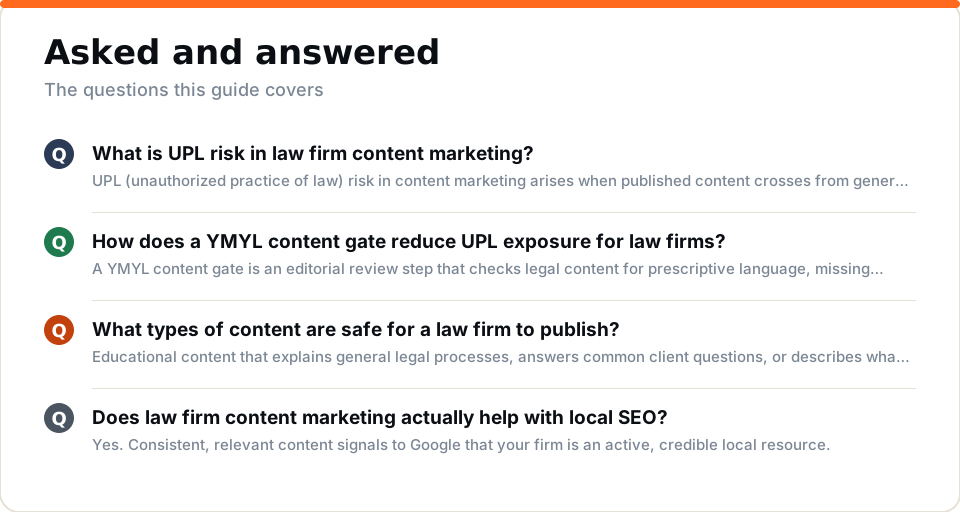
- What is UPL risk in law firm content marketing?
- UPL (unauthorized practice of law) risk in content marketing arises when published content crosses from general education into specific legal advice. A blog post explaining how divorce proceedings typically work is educational. Telling a reader exactly what to file in their situation is not. Clear disclaimers and careful language reduce this exposure significantly.
- How does a YMYL content gate reduce UPL exposure for law firms?
- A YMYL content gate is an editorial review step that checks legal content for prescriptive language, missing disclaimers, and jurisdiction-specific claims before publication. LocalLeadSignal builds this into its content workflow, catching potentially risky phrasing before it goes live, without replacing a firm's own legal review process.
- What types of content are safe for a law firm to publish?
- Educational content that explains general legal processes, answers common client questions, or describes what to expect during a consultation is generally safe. Content becomes risky when it tells a specific reader what to do in their situation. Tone, disclaimers, and avoiding prescriptive language are the key guardrails.
- Does law firm content marketing actually help with local SEO?
- Yes. Consistent, relevant content signals to Google that your firm is an active, credible local resource. Combined with a well-maintained Google Business Profile, local citations, and NAP consistency, content marketing strengthens your map pack ranking and overall local search visibility in a way that a static website simply cannot.
- How much does it cost to get SEO and content marketing help for a small law firm?
- Most SEO agencies start at $500 or more per location and assume you have an internal marketing team. LocalLeadSignal starts at $249 per month with no contract and handles everything: content, listings, reviews, and AI visibility. It is built specifically for small firms and solo practitioners without dedicated marketing staff.
See where your own business stands.
We measure your local rankings, your listings, your website, and how AI assistants answer for your business. No signup required.
Or jump straight to pricing →