
Notes
Local Link Building in 2026: How to Earn Backlinks Without a Big Agency Budget
You've claimed your Google Business Profile, kept your name, address, and phone consistent everywhere online, published a handful of solid blog posts, and still your competitor two blocks over is sitting comfortably in the map pack while…
Reviewed by Melike Erguven, Co-founder of LocalLeadSignal · July 24, 2026 · 14 min read
You've claimed your Google Business Profile, kept your name, address, and phone consistent everywhere online, published a handful of solid blog posts, and still your competitor two blocks over is sitting comfortably in the map pack while you're stuck on page two. If that sounds familiar, you're probably not missing an on-page fix. You're missing local links.
Backlinks from locally relevant, trustworthy websites tell Google that your business genuinely belongs in the community it serves. Not in a vague, algorithmic way, but in the way that a reference from a neighbor carries more weight than a reference from a stranger across the country. The good news is that earning those links doesn't require a PR firm, a big agency retainer, or knowing the right journalists. Most of the best opportunities are already sitting in the relationships and community involvement you've built just by operating a business.
This is a practical playbook. Whether you have a marketing team or you're handling everything yourself between client calls, everything here is actionable without a massive budget or a steep learning curve.
What Local Link Building Actually Is (and Why It Hits Different Than Regular SEO)
Local link building is the practice of earning backlinks from websites that are geographically or topically tied to your service area. That might be your city's chamber of commerce, a regional news outlet, a local nonprofit's partner page, or a neighborhood business association. The common thread is relevance to place, and that's what separates local link building from the broader SEO world's obsession with domain authority alone.
A link from a nationally recognized website with a high domain rating is genuinely valuable. But for a plumber serving one metro area or a dental practice with two locations, a link from a well-known local resource, even a smaller one, can carry more practical ranking weight because it's geographically relevant. Google isn't just counting links. It's reading context.
One thing that trips up a lot of local business owners is the difference between citations and backlinks. They're not the same thing, and confusing them leads to wasted effort. A citation is any mention of your business name, address, and phone number online, whether or not it links back to your website. Citations establish that your business exists and help with NAP consistency across the web. You can dig into how citations work and why accuracy matters if you want the full picture. Backlinks, on the other hand, are actual clickable links pointing to your site. They pass ranking authority. Both matter for local SEO, but they do different jobs, and you need both.
Local link building also works alongside your on-page fundamentals, not instead of them. Google Business Profile optimization, local business schema markup on your site, and tight on-page signals are the foundation. Links are what help that foundation get noticed. Think of it as credibility layered on top of accuracy. According to Google's own guidance on local ranking factors, prominence, which includes the information available about your business from across the web, is one of the three core elements that influence local rankings.
There's one more reason local links matter right now that wasn't on most people's radar a couple of years ago. AI search tools are increasingly surfacing locally trusted sources when answering questions with local intent. AI visibility for local businesses is becoming a real consideration, and when AI systems are deciding which sources to cite or recommend, they lean toward businesses that have genuine web credibility. Local link authority feeds directly into that. It's not something most small businesses are thinking about yet, which means it's still a real competitive edge.
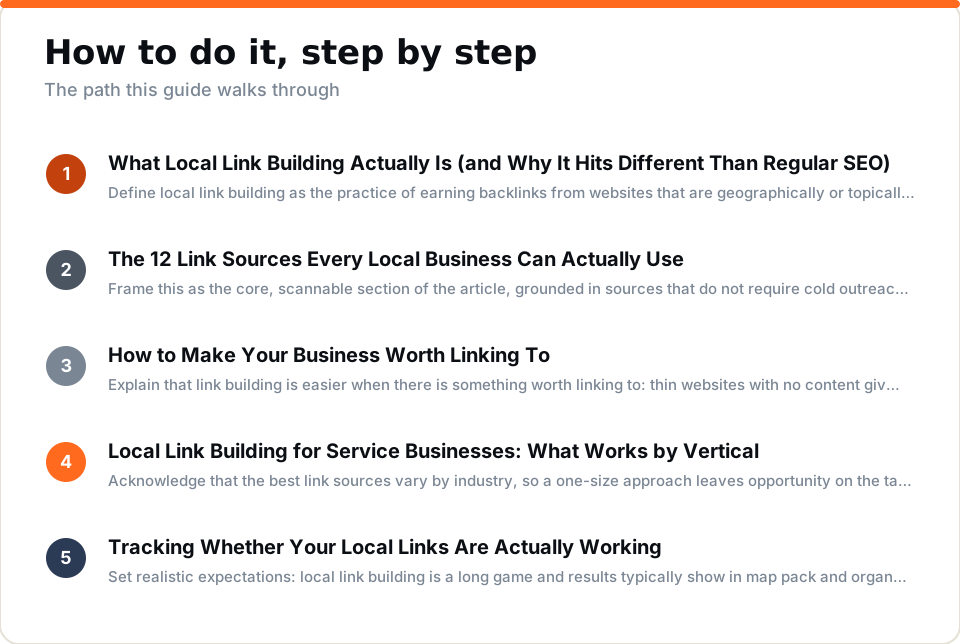
The 12 Link Sources Every Local Business Can Actually Use
Most link building advice is written for companies with a dedicated outreach team. These sources are different. They're grounded in relationships and community involvement that a working business owner can realistically tap without cold emails or a PR budget.
Local chambers of commerce and business associations are probably the easiest first stop. Most chamber memberships include a listing in an online member directory, and many of those directory links are followed links that pass real authority. If you're not already a member, the annual dues are usually modest, and the link alone often justifies a chunk of the cost. Effort level: low. Join, confirm your listing is live, and move on.
Sponsoring local events, youth sports leagues, or community fundraisers is a natural fit for businesses that are already giving back. Organizers almost universally publish a sponsors page on their website, and that page typically links to each sponsor. You're not buying a link; you're getting credit for legitimate community involvement. Effort level: low to medium, depending on how much coordination the sponsorship requires.
Local business awards and recognition lists are underused. Many chambers, business journals, and community organizations run annual "best of" or "rising business" programs. Nominations and wins typically result in a profile page with a link, plus the social proof that comes with being recognized. Effort level: low, mostly submitting a nomination form or encouraging customers to nominate you.
Nonprofit partnerships are worth pursuing beyond pure sponsorship. If you donate, volunteer, or collaborate on a community project, many nonprofits list their partners on a dedicated page. Ask. Most are happy to acknowledge the support. Effort level: low to medium.
Local news coverage and hyperlocal blogs take a bit more thought but don't require a PR firm. A newsworthy story, a new hire, an expansion, a community initiative you're leading, can earn genuine editorial coverage. Reach out to local reporters or bloggers with a short, specific pitch. They're often looking for local content and don't get enough of it. Effort level: medium.
Supplier and vendor partner pages are a quiet opportunity most businesses overlook. If you refer customers to certain products or services, or if you work with recognizable brands, check whether they maintain a partner or dealer locator page. Many do, and getting listed usually just requires filling out a form. Effort level: low.

Professional and industry association directories follow the same logic as chamber memberships. Local chapters of national groups, contractor guilds, medical associations, bar associations, often publish member directories online. Being listed puts your website in front of relevant, trusted web real estate. Effort level: low once you're a member.
Guest posts and expert quotes in local publications, neighborhood newsletters, and business journals position you as a credible voice while earning a link in the contributor bio or article body. You don't need to be a great writer. You need to know your subject well enough to share something useful. Effort level: medium.
University and college resource pages are a longer shot but genuinely valuable when they work. If you offer internships, speak at a business class, mentor students, or support a campus program, campus websites often link to participating businesses. These tend to be high-trust domains. Effort level: medium to high, but the relationship has value beyond the link.
Local podcast appearances and video features are worth pursuing in their own right, but the SEO angle is that show notes and episode pages almost always include a guest's website link. Finding a community-focused podcast in your area and pitching yourself as a guest takes a few emails. Effort level: low to medium.
Community link building through recap content is a newer tactic worth knowing about. Some local event organizers, neighborhood associations, and community blogs publish roundup posts or resource pages that link to businesses doing notable things in the area. Getting included often means showing up, contributing, and occasionally asking. Effort level: variable.
Chamber of commerce links and sponsor links from multiple sources compound over time. One link from a local organization isn't going to flip your rankings overnight, but five or six from distinct, relevant sources over a few months starts to build a referring domain profile that looks natural and reads as genuine community presence, because it is.
How to Make Your Business Worth Linking To
Here's something the link building conversation often skips: it's a lot easier to earn links when there's something worth linking to. A thin website with no real content, no useful pages, and nothing that demonstrates local expertise gives other site owners almost no reason to point their audience at you.
Locally useful content is the best foundation. Think neighborhood guides relevant to your service, service-area FAQ pages built around long-tail local keywords that your potential customers are actually searching, or resource pages that answer real questions specific to your area. None of this requires a content team. It requires knowing your customers well enough to write down what they ask you every week.
Your Google Business Profile and the schema markup on your website reinforce each other, together building a clear picture of your local identity. Sites that consider linking to you will often run a quick credibility check first, and a complete, active profile goes a long way toward passing it. Real photos, recent reviews, and accurate service details all signal that a business is legitimate and worth referencing. On the technical side, local business schema markup gives Google precise information about your category, location, and services, reducing any ambiguity about who you are and where you operate. For anyone ready to implement it correctly, the Google Search Central documentation on LocalBusiness structured data remains the authoritative reference, and getting that foundation right strengthens every local link building effort that follows.
Refreshing underperforming blog posts is also a practical move that gets overlooked. If you published content a year or two ago that ranks on page three for a decent keyword, updating it with more detail, better formatting, and sharper answers to user questions can push it into featured snippet territory. Content that earns a snippet earns links without you having to ask for them.
Review velocity ties into this more than most people expect. A business with dozens of recent, genuine Google reviews looks credible to a site editor deciding whether to link. It's a social proof layer that the web community can see, not just Google. Strong reviews, combined with a polished profile, make your business look like the kind of resource worth pointing to. Managing online reputation and getting a steady flow of reviews isn't just about customer trust, it's about building the kind of presence that attracts links passively over time.
Local Link Building for Service Businesses: What Works by Vertical
The 12 sources listed above work across industries, but the best specific opportunities vary by what kind of business you run. A one-size-fits-all approach leaves real opportunities untouched.
Healthcare practices, including dental offices, chiropractic clinics, and physical therapy practices, have a set of link sources that other businesses can't easily access. Hospital referral networks and local health coalitions often maintain resource pages for community providers. Patient education resources at schools, libraries, or community health organizations sometimes link to local practitioners who contribute content or speak at events. For dental SEO and chiropractor SEO specifically, schema markup for healthcare providers adds a layer of structured data that complements the links you're earning. Any content strategy in this space should stay HIPAA compliant, meaning no patient details, no implied outcomes, and nothing that creates a covered entity concern.
Law firms have access to bar association directories at both the state and local chapter level. Legal aid organizations often maintain resource pages for community members seeking help, and having a firm listed as a referral resource is both a genuine service and a source of authoritative links. Local government resource pages occasionally link to attorneys in specific practice areas where that's permitted. Law firm content marketing sits inside UPL guardrails, so the link-earning tactics that work best tend to be directory listings, speaking engagements, and partnership pages rather than broad how-to content that could be read as legal advice. For personal injury lawyer SEO and family law marketing, directory authority and local association membership are among the most reliable link sources available.

Home services and contractors benefit from local real estate agent resource pages, which are remarkably common. Many agents maintain a preferred vendor list on their website for clients who are buying or selling homes. Home builder association directories are another strong source. These are typically high-relevance, locally anchored domains that pass exactly the kind of geographic signal a contractor needs.
Retail and restaurants do well with local gift guide features, which regional blogs and publications often produce seasonally. Tourism board partner pages, neighborhood association spotlights, and local food or lifestyle publications all represent realistic targets that don't require national press coverage.
Tracking Whether Your Local Links Are Actually Working
Managing expectations is part of managing a link building program. Local link building compounds over time. A link you earn today will likely contribute to ranking movement over weeks or months, not days. That's not a flaw, it's just how sustained SEO progress works, and understanding it upfront keeps you from abandoning a strategy that's actually working.
The metrics worth watching are new referring domains, local keyword ranking movement for your core service terms, Google Business Profile impressions, and map pack position. These four signals, tracked together, give you a clear picture of whether your link activity is translating into actual visibility. Profile impressions in particular are a leading indicator that something is working before it shows up in full ranking data.
Starting with a local SEO audit gives you a baseline to measure against. Without knowing where you started, it's genuinely hard to tell whether a ranking change is meaningful or just noise. An audit documents your current referring domain count, your top-ranking keywords, your current map pack position for priority terms, and any obvious gaps in your listing health.
Tools like BrightLocal are useful for tracking citation consistency and local rankings. The tradeoff is that you're managing the tool yourself, interpreting the data, and deciding what to do about it. A service like LocalLeadSignal is built differently: instead of handing you a dashboard and walking away, it handles the tracking, the listings, the reviews, and the SEO work for you. Starting at $249 per month with no contract, it's built for businesses that don't have a marketing department to absorb that workload.
Quarterly recaps matter. Pulling together a simple review every three months of which link sources produced results, which rankings moved, and where the next opportunities are keeps the effort focused and prevents drift. For a single-location business, this doesn't need to be a formal report. A spreadsheet with a dozen rows reviewed once a quarter is enough to see what's actually working.
Why Most Local Businesses Never Do This (and What to Do Instead)
The real barrier isn't complexity. It's that link building feels uncertain when you're already stretched thin running a business. You can't always see immediate results, and the effort feels speculative compared to something like running a paid ad that shows a clear spend-to-lead ratio.
There's also a persistent belief that link building requires a big agency or a retainer that starts at $500 or more per location. That belief keeps a lot of small businesses from even starting. The reality is that most of the 12 sources covered earlier can be acted on in an afternoon each month, with no cold outreach scripts, no PR relationships, and no specialized tools.
The businesses that skip local link building are often the same ones trying to figure out why a competitor with a nearly identical website ranks above them in the map pack. On-page optimization alone, tight as it might be, doesn't answer the question of why Google should trust one business over another in a competitive local search. Links do a significant part of that answering.
Consistency is the actual competitive advantage here. A few solid local links built steadily over six months will consistently outperform a burst of low-quality links from directories no one has heard of. That's not a theory; it's how Google's link signals have worked for a long time, and local search is no different. Referring domains from genuinely relevant local sources accumulate into a trust profile that's hard to replicate quickly.
LocalLeadSignal's approach was built around this exact reality. Most SEO companies start at $500 or more per location and assume you already have someone internal to coordinate the strategy. LocalLeadSignal starts at $249 per month, there's no contract, and the work gets done for you: visibility tracking, listings management, reviews, schema, and SEO, handled as a service rather than handed back to you as a to-do list. It's designed for the business owner who knows local SEO matters and doesn't want to manage four different vendors to get it done.
Local link building is one of the highest-leverage things a single-location service business can do to improve its rankings, and most of the best opportunities are already within reach. Your chamber membership, your nonprofit relationships, your vendor connections, the local podcast that's been wanting a guest who knows your industry, none of those require a PR firm or a massive budget to activate.
The businesses that show up consistently in the map pack aren't usually doing something exotic. They've earned trust from locally relevant sources, kept their information accurate, and built up a profile that looks authoritative to both Google and the community. That's achievable for any well-run local business.
If you'd rather not piece this together on your own, that's exactly what LocalLeadSignal is for. See what LocalLeadSignal handles for you, starting at $249 per month with no contract.
Frequently asked questions
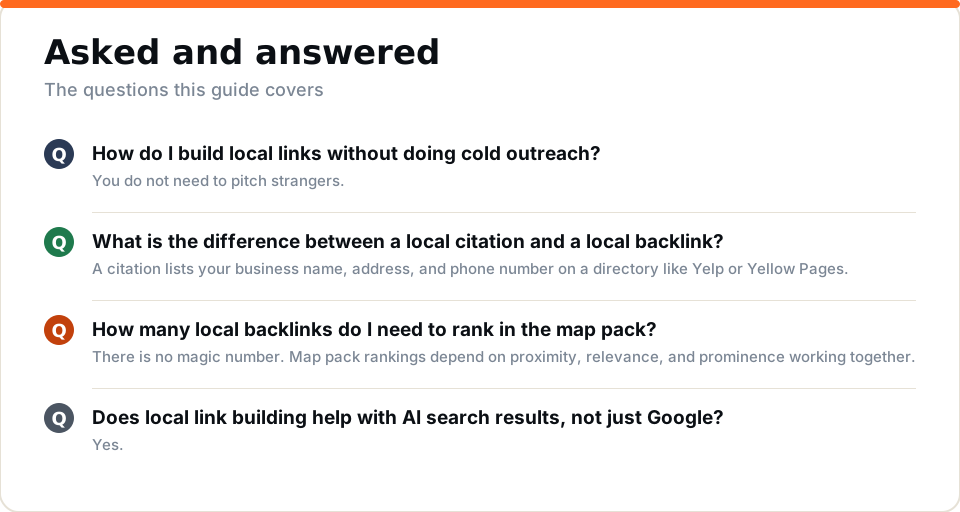
- How do I build local links without doing cold outreach?
- You do not need to pitch strangers. The most reliable local links come from places you already have a relationship with: your chamber of commerce, event sponsors pages, nonprofit partners, vendor or supplier directories, and local press covering newsworthy moments in your business. Most of these can be acted on in a single afternoon each month.
- What is the difference between a local citation and a local backlink?
- A citation lists your business name, address, and phone number on a directory like Yelp or Yellow Pages. It helps establish that your business exists and is consistent. A backlink is a clickable link from another website that passes ranking authority to yours. You need both, but backlinks tend to have a stronger direct impact on search rankings.
- How many local backlinks do I need to rank in the map pack?
- There is no magic number. Map pack rankings depend on proximity, relevance, and prominence working together. A handful of high-relevance local links from trusted community sources typically outperforms dozens of low-quality links. Focus on earning links from sites your community already trusts rather than chasing a specific count.
- Does local link building help with AI search results, not just Google?
- Yes. AI tools like ChatGPT and Perplexity pull information from sources they consider authoritative and locally relevant. When your business is linked from trusted local and industry sites, it increases the chance those AI tools surface your business in response to local service queries, which is increasingly important as more people search through AI assistants.
- Can a small service business do local link building without an agency?
- Absolutely. Many of the best local link sources, such as chamber directories, event sponsor pages, and local press, are accessible to any business owner willing to invest a few hours per month. If managing it alongside your other SEO tasks feels like too much, a service like LocalLeadSignal handles it for you starting at $249 per month.
See where your own business stands.
We measure your local rankings, your listings, your website, and how AI assistants answer for your business. No signup required.
Or jump straight to pricing →